Townsfolk

Librarian
You start knowing that 1 of 2 players is a particular Outsider. (Or that zero are in play.)
Certainly madam, under normal circumstances, you may borrow the Codex Malificarium from the library vaults. However, you do not seem to be a member.
"You start knowing that 1 of 2 players is a particular Outsider. (Or that zero are in play.)" The Librarian learns that a particular Outsider character is in play, but not exactly which player it is. During the first night, the Librarian learns that one of two players is a specific Outsider. They learn this only once and then learn nothing more. The Drunk is an Outsider. If the Librarian learns that one of two players is the Drunk, they do not learn the Townsfolk that the Drunk's player thinks they are.
How to Run
- While preparing the first night, put the Librarian's OUTSIDER reminder token by any Outsider character token, and put the Librarian's WRONG reminder token by any other character token.
- During the first night, wake the Librarian and point to the players marked OUTSIDER and WRONG. Show the character token marked OUTSIDER to the Librarian. Put the Librarian to sleep. Remove the Librarian's reminder tokens when convenient.
Townsfolk

Pixie
You start knowing 1 in-play Townsfolk. If you were mad that you were this character, you gain their ability when they die.
Round and round the garden, go. Little girls run to and fro. Little boys climb up the tree. Which of these should Pixie be? Ladies smile and go to town. Lords with axe chop forest down. What’s yours is mine. What’s mine, divine. Silly little Pixie, me.
"You start knowing 1 in-play Townsfolk. If you were mad that you were this character, you gain their ability when they die." The Pixie pretends to be the same character as someone else. On the first night, the Pixie learns an in-play Townsfolk. The Storyteller chooses which Townsfolk this is. The Pixie does not learn which player is this character. If the Pixie player pretends that they are this Townsfolk, they gain the ability of this Townsfolk when the Townsfolk dies. They could have spoken loudly about being the character for one day, or pretended to be the character each day this game, or accused the Townsfolk of being a liar—the Storyteller is the judge of whether or not the player was convincing, by “being mad that they are this character”. When the Townsfolk player dies, the Pixie does not learn this, and is not told that they have gained a new ability. They may learn this has happened if they wake at night and start gaining information, or are prompted to choose players. If the player the Pixie learns about changes character then dies, the Pixie gains the ability of the Townsfolk the Pixie learnt about, not the new character.
How to Run
- During the first night, mark a Townsfolk character token with the Pixie’s MAD reminder. Wake the Pixie. Show the Pixie this Townsfolk character token. Put the Pixie to sleep.
- If the Townsfolk marked MAD dies, and you feel that the Pixie player has been sufficiently mad that they were this character, replace the MAD reminder with the HAS ABILITY reminder. The Pixie now has this Townsfolk’s ability, and will wake at night when this Townsfolk would normally wake.
Townsfolk

Empath
Each night, you learn how many of your 2 alive neighbors are evil.
My skin prickles. Something is not right here. I can feel it.
"Each night, you learn how many of your 2 alive neighbors are evil." The Empath keeps learning if their living neighbours are good or evil. The Empath only learns how many of their neighbours are evil, not which one is evil. The Empath does not detect dead players. So, if the Empath is sitting next to a dead player, they do not get info about that dead player. Instead, they get info about the closest alive player in that direction. The Empath acts after the Demon, so if the Demon kills one of the Empath's alive neighbours, the Empath does not learn about the now-dead player. The Empath's information is accurate at dawn, not at dusk.
How to Run
- Each night, wake the Empath. Show them fingers (0, 1, or 2) equaling the number of evil players neighbouring the Empath. Put the Empath to sleep.
Townsfolk

General
Each night, you learn which alignment the Storyteller believes is winning: good, evil, or neither.
I don’t have time for quotes.
"Each night, you learn which alignment the Storyteller believes is winning: good, evil, or neither." The General knows who is winning. If the good team is winning, the Storyteller gives a thumbs up. If the evil team is winning, the Storyteller gives a thumbs down. If neither team is winning, or the Storyteller isn’t sure, the Storyteller gives a thumbs to the side. The Storyteller is the judge on which team is winning. Many factors may be included, such as how many players of each team are still alive, how much information the good team has, how successful the evil team’s bluffs seem to be, which players the group wants to execute next, or how experienced the Demon player is. All of these, and more, will inform the Storyteller’s judgment. The Storyteller decides who is winning at the point that the General wakes. Previous events in the night may affect their decision.
How to Run
- Each night, wake the General. If you believe that the good team is winning, give a thumbs up. If you believe that the evil team is winning, give a thumbs down. If you don’t know which team is winning, give a thumbs to the side. Put the General to sleep.
Townsfolk

Snake Charmer
Each night, choose an alive player: a chosen Demon swaps characters & alignments with you & is then poisoned.
Effendi... I am but a humble man, but my pipe is golden and a single tune will tame the wildest djinn, Inshallah. They say that greed hangs more men than rope. But not I, Effendi... not I.
"Each night, choose an alive player: a chosen Demon swaps characters & alignments with you & is then poisoned." The Snake Charmer learns player after player that is not the Demon... but becomes the Demon if they get either too greedy or too bold. Each night, they choose a player. If that player is not the Demon, nothing happens. If they are the Demon, the Snake Charmer becomes that Demon and turns evil, and the Demon becomes good and poisoned permanently. If the Philosopher has the Snake Charmer ability and becomes the Demon, the Demon becomes a poisoned Philosopher.
How to Run
- Each night, wake the Snake Charmer. They point at any player.
- If that player is not the Demon, nothing happens. Put the Snake Charmer to sleep.
- If that player is the Demon, the old Snake Charmer changes into the new (evil) Demon, and the old Demon changes into the new (good) Snake Charmer—swap the Snake Charmer token and the Demon’s token. The new Snake Charmer is poisoned - mark them with the POISONED reminder. Wake the new Demon and show them the YOU ARE info token, a thumbs-down, the YOU ARE token, then the Demon’s token. (This shows they are now evil and the Demon.) Put the new Demon to sleep. Wake the new Snake Charmer and show them the YOU ARE info token, a thumbs-up, the YOU ARE info token, then the Snake Charmer token. (This shows they are now good and the Snake Charmer.) Put the new Snake Charmer to sleep.
Examples & Notes
- In the strange situation that the Snake Charmer is evil, or the Demon good, swap their alignments as appropriate.
Townsfolk

Balloonist
Each night, you learn a player of a different character type than last night. [+0 or +1 Outsider]
More heat! Higher! Higher! Più alto! Ahhh... it is so beautiful from up here, don't you agree? Can you see the children fishing by the river, under the willow? Can you see the glint of the sun on the circus tent-poles? What's this? An old man, alone, passed out in the vineyard? Less heat! Lower! Lower! Vai più in basso!
"Each night, you learn a player of a different character type than last night. [+0 or +1 Outsider]" The Balloonist learns players of different character types. Each time the Balloonist learns a player, the player must have a different character type to the previously shown player. The Balloonist does not learn the character type of the player they learn. The shown player can be alive or dead. The shown player can be good or evil. If the Balloonist is drunk or poisoned, they may learn a character of the same type as the previously shown player. When the Balloonist becomes sober and healthy, they must learn a player of a different character type to the previously shown player. During setup, the Storyteller may choose to add an Outsider due to the Balloonist’s ability.
How to Run
- During setup, you may add an Outsider.
- When preparing the first night, mark any player with the KNOW reminder. When preparing each night afterwards, mark a character of a different type than the current with the KNOW reminder.
- Each night, wake the Balloonist. Point to the player marked KNOW. Put the Balloonist to sleep.
Townsfolk

Innkeeper
Each night*, choose 2 players: they can't die tonight, but 1 is drunk until dusk.
Come inside, fair traveller, and rest your weary bones. Drink and be merry, for the legions of the Dark One shall not harass thee tonight.
"Each night*, choose 2 players: they can't die tonight, but 1 is drunk until dusk." The Innkeeper protects people from death at night, but somebody gets drunk in the process. The Innkeeper, like the Monk, makes players safe from being killed by the Demon. They are also safe from death caused by Outsiders, Minions, Townsfolk, and Travellers. The Innkeeper only protects players at night, not the day. One of the two players that the Innkeeper chooses becomes drunk for tonight and the next day. This player may be good or evil, but will almost always be good, depending how your game is going. An Innkeeper that chooses themself might become drunk, which means they have no ability and may die tonight—and the other player they chose to protect isn’t safe either.
How to Run
- Each night except the first, wake the Innkeeper. They point at any two players. Put the Innkeeper to sleep. Mark the two chosen players with SAFE reminders. One of the chosen players becomes drunk—mark them with the DRUNK reminder. The players marked SAFE cannot die tonight.
- At dawn, remove the SAFE reminders.
- At dusk, remove the DRUNK reminder.
Townsfolk

Exorcist
Each night*, choose a player (different to last night): the Demon, if chosen, learns who you are then doesn't wake tonight.
We cast you out, every unclean spirit, every satanic power, every onslaught of the infernal adversary, every legion, every diabolical group and sect, in the name and by the power of Our Lord Jesus Christ. We command you, begone and fly far from the Church of God, from the souls made by God in His image and redeemed by the precious blood of the divine Lamb.
"Each night*, choose a player (different to last night): the Demon, if chosen, learns who you are then doesn't wake tonight." The Exorcist prevents the Demon from waking to attack. Each night, the Exorcist chooses a player. If they choose a player who is not the Demon, the Demon may still attack. If they choose the Demon, the Demon does not wake tonight, so does not choose players to attack tonight. The Demon learns that they cannot attack and who the Exorcist is. Any other Demon abilities still function—such as the Zombuul staying alive if killed, the Pukka killing a player they attacked on a previous night, or the Shabaloth regurgitating a player. The Exorcist may not choose the same player two nights in a row.
How to Run
- Each night except the first, wake the Exorcist. They point at any player. Mark the chosen player’s character token with the CHOSEN reminder. Put the Exorcist to sleep.
- If the Exorcist chose the Demon, wake the Demon. Show them the THIS CHARACTER SELECTED YOU info token and the Exorcist token, then point at the Exorcist player. Put the Demon to sleep. Later tonight, do not wake the Demon.
Examples & Notes
- A Demon chosen by the Exorcist will not wake to use their Demon ability, but will still wake if they need to due to other characters’ abilities. This may be relevant if using the Exorcist with characters from other editions.
Townsfolk

Savant
Each day, you may visit the Storyteller to learn 2 things in private: 1 is true & 1 is false.
Seventy-two matchsticks on the floor... the sun sets early but the moon is unchanged... a torn piece of cloth... evil in the manor house... three by three... the one we trusted is not what he seems... green light means magnesium... residue, but the pattern is wrong... Seventy-two matchsticks on the floor...
"Each day, you may visit the Storyteller to learn 2 things in private: 1 is true & 1 is false." The Savant gets crazy, amazing information that is different every day and every game, but exactly half of it is completely false. Each day, the Storyteller chooses two pieces of information to give the Savant... so get creative! One must be true, and one must be false, and the Savant won’t know which is which. It is up to the Savant to talk with the Storyteller, not the other way around. This isn’t a public conversation, and the group can’t listen in. It’s private. The Savant can choose to not visit the Storyteller if they wish. A drunk or poisoned Savant might get two pieces of true information or two pieces of false information.
How to Run
- Once per day, if the Savant requests a private chat with you, take them away from the circle so you cannot be overheard. Whisper two pieces of information, one true and one false, to the Savant. (If you cannot think of two straight away, either take your time or ask them to come back in a few minutes.)
Examples & Notes
- Keep the information you give helpful and related to the game. Avoid saying who exactly the Demon is, or it could be a very short game. If you need help on choosing what to say, give information similar to what Townsfolk abilities would provide.
Townsfolk

Courtier
Once per game, at night, choose a character: they are drunk for 3 nights & 3 days.
I am more afraid of an army of one hundred sheep led by a lion than an army of one hundred lions led by a sheep.
"Once per game, at night, choose a character: they are drunk for 3 nights & 3 days." The Courtier gets a character drunk, without knowing which player it is. Once per game, the Courtier chooses a character to be drunk for three nights and three days, starting immediately. The Courtier does not learn if they were successful or not, so they might choose a character that is not in play. The Courtier chooses a character, not a player. The Courtier player may need to be reminded of this. Evil players bluffing as the Courtier may also need to be reminded. If the drunk or poisoned Courtier chooses a character, that character is not drunk, even if the Courtier later becomes sober and healthy. If the Courtier made a character drunk, but the Courtier becomes drunk or poisoned, the player they made drunk becomes sober again. If the Courtier becomes sober and healthy again before the three nights and three days have ended, that player becomes drunk yet again.
How to Run
- Each night, wake the Courtier. They either shake their head no or point at any character icon on their character sheet. Put the Courtier to sleep.
- If the Courtier chose a character icon and that character is in play, the player of the chosen character becomes drunk for three nights and three days. Tonight, mark them with the Courtier’s DRUNK 1 reminder. The next night, replace the DRUNK 1 reminder with the DRUNK 2 reminder. The next night, replace the DRUNK 2 reminder with the DRUNK 3 reminder. At dusk on the next night, remove the DRUNK 3 reminder, and the Courtier loses their ability—mark them with the NO ABILITY reminder and remove their night token from the night sheet.
- After the Courtier chooses a character to make drunk, do not wake the Courtier for the rest of the game.
Examples & Notes
- In other editions, there can be multiple copies of the same character in play. The Courtier only makes one of them drunk.
Townsfolk

Fisherman
Once per game, during the day, visit the Storyteller for some advice to help your team win.
This was my favourite part of the river... see how the sunlight makes a rainbow from the monastery to the market? This was the best place for big fish. And the older I get, the bigger they were.
"Once per game, during the day, visit the Storyteller for some advice to help your team win." The Fisherman knows something that nobody else can know: what should be done. The Fisherman player chooses when to use their ability. When they visit the Storyteller, the Storyteller chooses what piece of advice to give the Fisherman. The Storyteller’s pieces of advice are not necessarily “facts”. They are strategy tips that the Storyteller believes will help the Fisherman win, if they are followed. If the Fisherman is drunk or poisoned, the Storyteller may give the Fisherman bad advice.
How to Run
- Once per game, the Fisherman will ask to use their ability. In private, give them once piece of advice to help them win. Then, put the No ability reminder by the Fisherman token.
Examples & Notes
- It is best to give the Fisherman advice on what to DO, not just information about what IS. This makes the Fisherman more fun and unique.
- Eg. Saying “You should execute that player” or “Keep this player alive” or “find out who is drunk” or “change your thinking entirely” or “ignore the Minions” or “trust this player” are much more interesting than saying “this player is evil” or “the Demon is a No Dashii”.
Townsfolk

Mayor
If only 3 players live & no execution occurs, your team wins. If you die at night, another player might die instead.
We must put our differences aside, and cease this senseless killing. We are all taxpayers after all. Well, most of us.
"If only 3 players live & no execution occurs, your team wins. If you die at night, another player might die instead." The Mayor can win by peaceful means on the final day. To survive, the Mayor sometimes "accidentally" gets someone else killed. If the Mayor is attacked and would die, the Storyteller may choose that a different player dies. Nobody learns how they died at night, just that they died. If there are just three players alive at the end of the day, and no execution occurred that day, then the game ends and good wins. Travellers count as players for the Mayor's victory, so must be exiled first. Remember that exiles are not executions. Fabled don't count as players for the Mayor's victory, as the Storyteller isn't a player. If the Demon attacks the Mayor, and the Storyteller instead chooses a dead player, the Soldier, or a player protected by the Monk, that player does not die tonight.
How to Run
- During the night, if the Mayor would die, you choose if the Mayor actually dies, or if the Mayor remains alive and another character dies instead—put the Demon's DEAD reminder token by that character token instead of the Mayor, and put a shroud on that character token instead of the Mayor.
- At dawn, declare that the player marked DEAD died at night. (Do not say how they died.)
- At dusk, if exactly three players are alive and no player was executed today, declare that the game ends and good wins.
Examples & Notes
- We recommend you keep the Mayor alive until the final day, since it is most fun for the players that way. On rare occasions, if the group is overwhelmingly convinced early in the game that the Mayor is the Mayor, let the Mayor die so that evil has a chance to win.
- In TROUBLE BREWING, the Mayor’s phrase “your team wins” will always mean “good wins” because the Mayor is always good. In other editions, an evil Mayor means “evil wins” instead.
Townsfolk

Cannibal
You have the ability of the recently killed executee. If they are evil, you are poisoned until a good player dies by execution.
I don’t like clowns. They taste funny.
"You have the ability of the recently killed executee. If they are evil, you are poisoned until a good player dies by execution." The Cannibal eats executed characters, gaining their ability. If a good player dies by execution, the Cannibal gains that player’s ability. If an evil player dies by execution, the Cannibal only thinks that they gain an ability, since the Cannibal is poisoned. The Storyteller may be lying to them. Each time a player dies by execution, the Cannibal loses the ability of the previous player. Executing a dead player won’t grant the Cannibal an ability. Executing a living player who doesn’t die won’t grant the Cannibal an ability. A player must be executed and die for the Cannibal to gain their ability. The Cannibal is not told which ability they have gained. They must figure that out for themselves. If the Cannibal has an “even if dead” ability, such as the Recluse, or an ability that implies it works while dead, such as the Ravenkeeper or Sweetheart, the Cannibal keeps that ability when they die, but loses their Cannibal ability.
How to Run
- If a good player dies by execution, mark them with the LUNCH reminder, and remove the Cannibal’s POISONED reminder if necessary. The Cannibal now has this good player’s ability (do not say which), and will wake at night when this good character would normally wake.
- If an evil player dies by execution, mark them with the LUNCH reminder and mark the Cannibal with the POISONED reminder. The Cannibal is poisoned. You may wake them when this evil character would normally wake, and pretend that they have a new ability.
Examples & Notes
- Pay attention to which character each evil player is bluffing as. If they are executed, then their bluffed ability is the best one to pretend that the Cannibal has gained.
Outsider

Drunk
You do not know you are the Drunk. You think you are a Townsfolk character, but you are not.
I’m only a hic social drinker, my dear. Admittedly, I am a heavy burp socializer.
"You do not know you are the Drunk. You think you are a Townsfolk character, but you are not." The Drunk player thinks that they are a Townsfolk, and has no idea that they are actually the Drunk. During setup, the Drunk's token does not go in the bag. Instead, a Townsfolk character token goes in the bag, and the player who draws that token is secretly the Drunk for the whole game. The Storyteller knows. The player does not. The Drunk has no ability. Whenever their Townsfolk ability would affect the game in some way, it doesn't. However, the Storyteller pretends that the player is the Townsfolk they think they are. If that character would wake at night, the Drunk wakes to act as if they are that Townsfolk. If that Townsfolk would gain information, the Storyteller may give them false information instead—and the Storyteller is encouraged to do so.
How to Run
- While setting up the game, before putting character tokens in the bag, remove the Drunk token and add a Townsfolk character token. Add the Drunk's IS THE DRUNK reminder token to the Grimoire. Put the swapped Townsfolk character token in the bag, not the Drunk character token.
- While preparing the first night, put the Drunk's IS THE DRUNK reminder token by any Townsfolk character token, changing that player's character to the Drunk. They are now an Outsider, and do not have the ability of this Townsfolk character. (But they think they do.)
- During the game, act as if the Drunk is actually this Townsfolk character. (If that character would wake to act at night, the Drunk wakes to act. If their ability would give them information, you can give false information to them if you wish. See "Drunkenness and Poisoning" in the rulebook.)
Outsider

Saint
If you die by execution, your team loses.
Wisdom begets peace. Patience begets wisdom. Fear not, for the time shall come when fear too shall pass. Let us pray, and may the unity of our vision make saints of us all.
"If you die by execution, your team loses." The Saint ends the game if they are executed. If the Saint dies by execution, the game ends. Good loses and evil wins. If the Saint dies in any way other than execution—such as the Demon killing them—then the game continues.
How to Run
- If the Saint dies by execution, declare that the game ends and evil wins.
- The Saint's ability has the strange phrase "your team loses." In Trouble Brewing, this will always mean "evil wins" because the Saint is always good. In other editions, it is possible for characters to change alignment. If the evil Saint is executed, good wins.
Outsider

Mutant
If you are “mad” about being an Outsider, you might be executed.
I am not a freak! I am a human being! Have mercy!
"If you are "mad" about being an Outsider, you might be executed." The Mutant is killed if they try to reveal who they are. “Madness” is a term that means “you are trying to convince the group of something.” So, if the Mutant player is mad about being the Mutant, this means they are trying to convince people that they are the Mutant. If they are mad about being an Outsider, this means they are trying to convince people that they are an Outsider. This can be by verbally hinting who they are, or by their silence when questioned. It is always up to the Storyteller to decide what the Mutant is doing. If you think they are trying to convince the group they are an Outsider in any way, you can execute them—even outside the nomination phase, or at night. If you do, no other executions may happen today by normal means, since there is only one execution per day. If the Mutant hints that they are the Mutant at night, you may execute them that night, even if an execution happened today. Declare they have died, and continue the night phase as normal. An execution may still happen the next day.
How to Run
- At any time (even at night), if you believe that the Mutant is mad about being an Outsider, then you can decide to execute the Mutant. Declare this to the group. They die - mark them with a shroud.
- If you execute them during the day before the normal execution happens, go to the night phase. (There is a maximum of one execution per day.)
Outsider

Heretic
Whoever wins, loses & whoever loses, wins, even if you are dead.
After the hail has smashed the roof and splintered the glass of the Cathedral windows, it melts again into the earth, like a dying lamb in the desert sun. Such is the parable of the madman.
"Whoever wins, loses & whoever loses, wins, even if you are dead." The Heretic turns a win into a loss, and a loss into a win. If the game ends due to the good team winning, then all good players lose, and all evil players win. If the game ends due to the evil team winning, then all evil players lose, and all good players win. The Heretic’s ability applies to all victory conditions, including the game ending due to just two players being alive, the Demon dying, or an ability ending the game. The Heretic’s ability functions even when the Heretic is dead, but not when the Heretic is drunk or poisoned.
How to Run
- If the game ends and the evil team would have won, declare that the good team wins and the evil team loses.
- If the game ends and the good team would have won, declare that the evil team wins and the good team loses.
Outsider

Politician
If you were the player most responsible for your team losing, you change alignment & win, even if dead.
I'm glad you asked that question. Truly, I am. But I think the REAL question here is...
"If you were the player most responsible for your team losing, you change alignment & win, even if dead." The Politician changes teams if they are losing. When the game ends, if the Politician was responsible for good losing, then the Politician turns evil and wins too. The player needs to be very influential when determining who wins. Simply spreading false information or voting for good players is usually not enough – they need to be the player that was more responsible for the good team losing than any other good player, and preferably more responsible than any one evil player too. The Storyteller is the judge of whether the Politician’s actions qualify. The Politician may still win with the good team, as normal. A drunk or poisoned Politician can not change teams.
How to Run
- When the game ends, if good lost and you feel that this was significantly due to the words and actions of the Politician player, declare that the Politician turns evil and wins too.
- In the rare instance that the Politician is evil, and plays a big part in losing the game for evil, declare that the Politician turns good and wins with the good team.
Minion
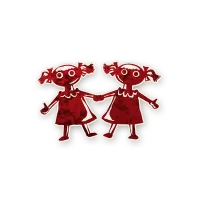
Evil Twin
You & an opposing player know each other. If the good player is executed, evil wins. Good can't win if you both live.
I'm not Sara! I'm Clara! SHE is Sara! Sara is the evil one! Not me!
"You & an opposing player know each other. If the good player is executed, evil wins. Good can't win if you both live." The Evil Twin mirrors a good character, so that the players don't know which twin is good and which twin is evil. The Evil Twin is paired with a good player, chosen by the Storyteller, called the Good Twin. On the first night, the Evil Twin and Good Twin both wake, make eye contact, and learn each other’s character. If the Good Twin is executed, evil wins. If the Evil Twin is executed, the game continues. A dead Evil Twin has no ability, so evil doesn’t win if the Good Twin is later executed. Good cannot win while both twins are alive. Even if the Demon is killed, the game continues. Good will need to kill the Evil Twin as well as the Demon to win. If a good player is turned into an Evil Twin, they are still a good player, with an evil player becoming their twin. It doesn’t matter which twin is which character, what matters is their alignment—the good team can execute the evil player safely, but if they execute the good player, evil wins. If both Twins are the same alignment, the Storyteller chooses a new Twin.
How to Run
- While setting up the game, choose a Good Twin by marking any good character with the TWIN reminder. During the first night, wake both Twins. Let them make eye contact. Point at the Evil Twin, then show the Evil Twin token to the Good Twin. Point at the Good Twin, then show the Good Twin’s character token to the Evil Twin. Put them both to sleep.
- While both Twins are alive, the good team cannot win. If a good- aligned Twin is executed, the evil team wins.
Examples & Notes
- If a Pit-Hag creates an Evil Twin during the final night, either make the other Twin the Demon player or a dead player, so that the good team is still able to win.
- It is rarely a good idea to choose a Traveller to be a Twin.
Minion

Poisoner
Each night, choose a player: they are poisoned tonight and tomorrow day.
Add compound Alpha to compound Beta... NOT TOO MUCH!
"Each night, choose a player: they are poisoned tonight and tomorrow day." The Poisoner secretly disrupts character abilities. Each night, the Poisoner chooses someone to poison for that night and the entire next day. A poisoned player has no ability, but the Storyteller pretends they do. They do not affect the game in any real way. However, to keep up the illusion that the poisoned player is not poisoned, the Storyteller wakes them at the appropriate time and goes through the motions as if they were not poisoned. If their ability gives them information, the Storyteller may give them false information. If a poisoned player uses a "once per game" ability while poisoned, they cannot use their ability again.
How to Run
- Each night, wake the Poisoner. They point at any player. The chosen player becomes poisoned—put the POISONED reminder token by the chosen player's character token. Put the Poisoner to sleep. (This poisoned player wakes and acts normally. They have no ability, but they think they do. If their ability would give them information, you can give false information to them if you wish. See “Drunkenness and Poisoning” in the rulebook.)
- Each dusk, the poisoned player becomes healthy—remove their POISONED reminder.
Minion

Mastermind
If the Demon dies by execution (ending the game), play for 1 more day. If a player is then executed, their team loses.
The tentacles of that monster are nailed to the doors of the church. Mothers and children are dancing in the street. Excellent. Everything is proceeding exactly as I have planned.
"If the Demon dies by execution (ending the game), play for 1 more day. If a player is then executed, their team loses." The Mastermind can still win after the Demon is dead. If the Demon dies by execution, the game continues. The players do not learn that the Demon died. The following day, if a good player is executed—whether or not they die from it—then evil wins. If an evil player is executed or nobody is executed, then the good team wins. A dead Demon does not get to attack. They lose their ability, as normal. During this extra night and day, other characters’ abilities function as normal. If the Demon dies and just two players are left alive, the game still continues for another day—evil does not win from two players being alive, and good did not win by killing the Demon. The Mastermind ability says “play for one more day,” and abilities override standard game rules.
How to Run
- If the Demon is executed and dies, and the game would end, continue playing the game. (Add a shroud as normal. Do not say that the Demon has died.)
- Tomorrow, if a good player is executed, declare that the game ends and evil wins, but if an evil player or no player is executed, declare that the game ends and good wins.
Minion

Scarlet Woman
If there are 5 or more players alive & the Demon dies, you become the Demon. (Travellers don't count.)
You have shown me the secrets of the Council of the Purple Flame. We have lain together in fire and in lust and in beastly commune, and I am forever your servant. But tonight, my dear, I am your master.
"If there are 5 or more players alive & the Demon dies, you become the Demon. (Travellers don't count.)" The Scarlet Woman becomes the Demon when the Demon dies. If there are five or more players just before the Demon dies—that is, four or more players left alive after the Demon dies—then the Scarlet Woman immediately becomes the Demon, and the game continues as if nothing happened. Travellers do not count as players when seeing if the Scarlet Woman's ability triggers. If less than five players are alive when the Demon is executed, then the game ends and good wins. If five or more players are alive when the Imp kills themself at night, the Scarlet Woman must become the new Imp. If the Scarlet Woman becomes the Demon, they are that Demon in every way. Good wins if they are executed. They attack each night. They register as the Demon.
How to Run
- If the Demon dies and there were five or more alive players immediately before the Demon died, replace the Scarlet Woman token with a spare Imp token, changing that player's character from the Scarlet Woman into the Imp. (They are now the Demon and have the Imp's ability. If they die, good wins.)
- That night, wake the new Imp, show them the YOU ARE info token, then show them the Imp token.
- In Trouble Brewing, there is only one Demon—the Imp. In other editions, there are multiple possible Demons. If the Scarlet Woman becomes the Demon, they become the same type of Demon that died, and they gain this Demon's ability. When this happens, mark the Scarlet Woman with the IS THE DEMON reminder and refer to that Demon's "How to Run" instructions.
Demon

Imp
Each night*, choose a player: they die. If you kill yourself this way, a Minion becomes the Imp.
We must keep our wits sharp and our sword sharper. Evil walks among us, and will stop at nothing to destroy us good, simple folk, bringing our fine town to ruin. Trust no-one. But, if you must trust someone, trust me.
"Each night*, choose a player: they die. If you kill yourself this way, a Minion becomes the Imp." The Imp kills a player each night, and can make copies of itself... for a terrible price. On each night except the first, the Imp chooses a player to kill. Because most characters act after the Demon, that player will probably not get to use their ability tonight. The Imp, because they're a Demon, knows which players are their Minions, and knows three not-in-play good characters that they can safely bluff as. If the Imp dies, the game ends and good wins. However, if the Imp kills themself at night, they die and an alive Minion becomes an Imp. This new Imp does not act that same night, but is now the Imp in every other way—they kill each night, and lose if they die.
How to Run
- Each night except the first, wake the Imp. The Imp points at any player. Put the Imp to sleep. The chosen player dies—put the Imp's DEAD reminder by the chosen player's character token in the Grimoire and put a shroud on it.
- If the Imp killed themself at night, choose an alive Minion and replace their character token with a spare Imp token, changing their character to the Imp. Wake the new Imp, show them the YOU ARE info token, then show them the Imp token. Put the new Imp to sleep.
- At dawn, declare which player died at night. (Do not say how they died.)
- If the Imp attacks a dead player at night, let them do so. Whenever a character's ability says "choose a player," that means that any player—alive or dead—can be chosen. The Imp may be planning on bluffing as the Soldier, and this kind of thing helps their bluff look stronger.
Demon

Pukka
Each night, choose a player: they are poisoned. The previously poisoned player dies then becomes healthy.
You truly have been kind welcoming me into your beautiful home. I am so sorry I accidentally scratched you. A little thing. No matter. But please, take this golden toothpick as a humble token of my regret.
"Each night, choose a player: they are poisoned. The previously poisoned player dies then becomes healthy." The Pukka poisons its victims, who die at a later time. When the Pukka attacks, their victim is poisoned immediately. The next night, just after the Pukka attacks again, that player dies. Unlike other Demons, the Pukka acts during the first night. The Exorcist prevents the Pukka from waking to poison a player. The Innkeeper prevents the Pukka from killing a poisoned player, then that player is no longer poisoned. If the Pukka is drunk and chooses a player, that player does not become poisoned, so does not die the following night. If the Pukka was sober when they chose a player the previous night, but is drunk at night, that player does not die. But when the Pukka sobers up, the poison resumes and kills the player at night.
How to Run
- Each night, wake the Pukka. They point at any player. Put the Pukka to sleep. The chosen player is poisoned—mark them with a POISONED reminder.
- Each night except the first, the other player marked POISONED dies—mark them with a DEAD reminder, then remove their POISONED reminder.
Examples & Notes
- Players that the Pukka kills are still poisoned at their time of death. If you are using characters from other editions, you may need to keep the POISONED reminder by the DEAD reminder until their death ability is resolved. For example, if the Pukka kills the Sage, the Sage may get false information due to being poisoned by the Pukka.
Demon

Fang Gu
Each night*, choose a player: they die. The 1st Outsider this kills becomes an evil Fang Gu & you die instead. [+1 Outsider]
Your walls and your weapons are but smoke in dreams.
"Each night*, choose a player: they die. The 1st Outsider this kills becomes an evil Fang Gu & you die instead. [+1 Outsider]" The Fang Gu possesses Outsiders. The first time a Fang Gu attacks and kills an Outsider, the Fang Gu dies, and the Outsider becomes a Fang Gu and turns evil. This can only happen once per game. If the new Fang Gu attacks an Outsider, the Outsider dies as normal. The new Fang Gu counts as the Demon, and good wins if they die. They do not learn which players are Minions. There is an extra Outsider in play. If the Fang Gu attacks an Outsider but that Outsider does not die, that Outsider does not become an evil Fang Gu and the Fang Gu does not die.
How to Run
- While setting up the game, before putting character tokens in the bag, add one extra Outsider character token and remove one Townsfolk character token.
- Each night except the first, wake the Fang Gu. They point at any player. Put the Fang Gu to sleep.
- If the chosen player is not an Outsider, that player dies—mark them with the DEAD reminder.
- If the chosen player is an Outsider and the ONCE reminder is in the center of the Grimoire, that player dies—mark them with the DEAD reminder.
- If the chosen player is an Outsider and the ONCE reminder is not in the centre of the Grimoire, the Fang Gu dies—mark them with the DEAD reminder. Wake the chosen Outsider. Show them the YOU ARE info token, then the Fang Gu token, then the YOU ARE info token, then a thumbs-down. Change their character to a Fang Gu—swap their character token with the spare Fang Gu token. They become evil. Put the new Fang Gu to sleep. Put the ONCE reminder in the center of the Grimoire. (Unlike “Once per game” abilities, this reminder stays there for the rest of the game. Don’t remove it, even if the Fang Gu dies or changes character.)