Townsfolk

Grandmother
You start knowing a good player & their character. If the Demon kills them, you die too.
Take a jacket if you go outside, dearie. And your thermos. And your scarf. I have a weak heart, you know. Whatever would I do if you caught cold...or worse?
"You start knowing a good player & their character. If the Demon kills them, you die too." The Grandmother knows who their grandchild is, but if they are killed by the Demon, the Grandmother dies too. During the first night, the Grandmother learns their Grandchild—a good player who is a Townsfolk or Outsider. The Grandchild does not learn that they have a Grandmother. If the Demon kills the Grandchild, the Grandmother dies too. If the Grandchild dies by any other means—such as execution, or another type of death at night—the Grandmother does not also die.
How to Run
- When preparing the first night, choose a Grandchild by marking any good character with the GRANDCHILD reminder.
- During the first night, wake the Grandmother and show them the character token marked GRANDCHILD, then point at the Grandchild player, then put the Grandmother to sleep.
- If the Demon kills the Grandchild, the Grandmother dies - mark them with the DEAD reminder.
Townsfolk

Empath
Each night, you learn how many of your 2 alive neighbors are evil.
My skin prickles. Something is not right here. I can feel it.
"Each night, you learn how many of your 2 alive neighbors are evil." The Empath keeps learning if their living neighbours are good or evil. The Empath only learns how many of their neighbours are evil, not which one is evil. The Empath does not detect dead players. So, if the Empath is sitting next to a dead player, they do not get info about that dead player. Instead, they get info about the closest alive player in that direction. The Empath acts after the Demon, so if the Demon kills one of the Empath's alive neighbours, the Empath does not learn about the now-dead player. The Empath's information is accurate at dawn, not at dusk.
How to Run
- Each night, wake the Empath. Show them fingers (0, 1, or 2) equaling the number of evil players neighbouring the Empath. Put the Empath to sleep.
Townsfolk

Flowergirl
Each night*, you learn if a Demon voted today.
Yesterday's violets have withered and died, but today my poppies bloom.
"Each night*, you learn if a Demon voted today." The Flowergirl knows if the Demon voted or not. A Demon’s vote counts whether or not the nominee was executed. The Flowergirl does not detect if the Demon raised their hand for other reasons, such as when the players “vote” on what to order for dinner, or when the players raise their hand to exile a Traveller. If the Demon changes players after the original Demon voted but before the Flowergirl wakes to learn their information, the Flowergirl detects the original Demon. If there are two (or more!) Demons, even dead Demons, the Flowergirl detects if any of them voted. If even one Demon voted, the Flowergirl learns a “yes”.
How to Run
- Each dawn, mark the Flowergirl with the DEMON NOT VOTED reminder, and remove the DEMON VOTED reminder, if any.
- Each day, if the Demon votes for any execution, replace the DEMON NOT VOTED reminder with the DEMON VOTED reminder.
- Each night except the first, wake the Flowergirl. If the Flowergirl is marked DEMON NOT VOTED, shake your head no. If the Flowergirl is marked DEMON VOTED, nod your head yes. Then, put the Flowergirl to sleep.
Examples & Notes
- If you forget whether the Demon voted or not, wake the Demon at night and ask by showing them the DID YOU VOTE TODAY? info token. They must answer honestly, then go to sleep.
Townsfolk

Oracle
Each night*, you learn how many dead players are evil.
Only the chosen may gaze beyond the veil. The dead are restless, and they point in silence toward the icy north.
"Each night*, you learn how many dead players are evil." The Oracle knows how many dead players are evil. Because the Oracle acts after the Demon attacks each night, the Oracle’s info refers to the players that are dead when dawn breaks and all players open their eyes. The Oracle detects dead Minions and Demons, but also any other players that are evil, such as evil Travellers, or Townsfolk and Outsiders that have been turned evil. When counting the number of dead players, remember to count Townsfolk and Outsider tokens that are upside-down, which means their alignment is the opposite of what is printed.
How to Run
- Each night except the first, wake the Oracle. Show fingers (0, 1, 2, etc.) equaling the number of dead evil players. Then, put the Oracle to sleep.
Townsfolk

Undertaker
Each night*, you learn which character died by execution today.
Hmmm....what have we here? The left boot is worn down to the heel, with flint shavings under the tongue. This is the garb of a Military man.
"Each night*, you learn which character died by execution today." The Undertaker learns which character was executed today. The player must have died from execution for the Undertaker to learn who they are. Deaths during the day for other reasons, such as the Gunslinger choosing a player to kill, or the exile of a Traveller, do not count. The Undertaker wakes each night except the first, as there have been no executions yet. If nobody died today, the Undertaker learns nothing. The Storyteller either does not wake the Undertaker at night, or wakes them but does not show a token. If the Drunk is executed, the Undertaker is shown the Drunk character token, not the token for the Townsfolk that the Drunk player thought they were.
How to Run
- If a player dies by execution, put the Undertaker's DIED TODAY reminder token by the dead player's character token.
- Each night except the first, if any player died by execution today, wake the Undertaker. Show the character token marked DIED TODAY to the Undertaker. Put the Undertaker to sleep. Remove the Undertaker's reminder token when convenient.
- In Trouble Brewing, there can only be one execution per day, and every execution causes a player to die. In other editions, there may be more than one execution per day (in which case the Storyteller chooses which character to show the Undertaker) or the execution does not cause a death (in which case the Undertaker learns nothing).
Townsfolk
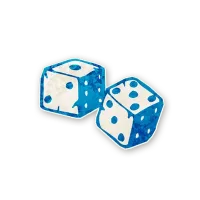
Gambler
Each night*, choose a player & guess their character: if you guess wrong, you die.
Heads, I win. Tails, you lose.
"Each night*, choose a player & guess their character: if you guess wrong, you die." The Gambler can guess who is who... but pays the ultimate price if they guess wrong. Each night except the first, the Gambler chooses a player and guesses their character by pointing to its icon on the character sheet. If the guess is correct, nothing happens. If the guess is incorrect, the Gambler dies. The Gambler does not learn from the Storyteller whether their guess is correct or incorrect. The Gambler may choose any player, dead or alive, even themself.
How to Run
- Each night except the first, wake the Gambler. They point at any player, then point at any character icon on their character sheet. Put the Gambler to sleep. If the chosen player is a different character from the chosen character icon, the Gambler dies—mark them with the DEAD reminder.
Townsfolk

Gossip
Each day, you may make a public statement. Tonight, if it was true, a player dies.
Blah blah blah blah blah blah blah blah blah blah blah blah blah blah blah blah blah blah blah blah blah blah blah blah blah. Blah.
"Each day, you may make a public statement. Tonight, if it was true, a player dies." The Gossip deliberately speaks lies, in the hope of uncovering the truth. Each day, the Gossip may make a public statement. If this statement is true, the Storyteller kills a player that night. If it is false, then no players die due to the Gossip. Mumbled words, whispers, statements the Storyteller doesn’t know are true or false, or statements that someone cannot hear don’t count. Like the Slayer’s ability, the Storyteller and every player must be able to hear and understand the Gossip and be aware that the Gossip is using their ability in order for the Storyteller to judge what happens next. If the Gossip made a true statement during the day while drunk or poisoned, but is sober and healthy when their ability triggers that night, the Storyteller still kills a player.
How to Run
- Each day, if the Gossip makes a definite, true public statement, put the Gossip’s DEAD reminder in the center of the left side of the Grimoire as a reminder to yourself to place it tonight.
- Each night except the first, if the Gossip made a definite, true public statement today, you choose any player. The chosen player dies—mark them with the DEAD reminder.
Examples & Notes
- When choosing a player to die due to the Gossip ability, we recommend that you choose a character that will actually die, not one protected from death by an ability (like the Fool or Tea Lady). The Gossip gains knowledge when their statement caused a death. This is more helpful to the good team, and more fun for everyone.
Townsfolk

Philosopher
Once per game, at night, choose a good character: gain that ability. If this character is in play, they are drunk.
If anything is real, beer is real. Drink, for tomorrow we may die.
"Once per game, at night, choose a good character: gain that ability. If this character is in play, they are drunk." The Philosopher has no ability until they decide which character they want to emulate. They can do this once per game. When they do so, they gain that character’s ability. They do not become that character. They may want to wait a while to choose. If the Philosopher chooses a character that is already in play, the player of that character becomes drunk. If the Philosopher then dies or becomes drunk or poisoned, the player they are making drunk becomes sober again. If the Philosopher chose a character that was not in play at the time but is in play now, that character is drunk. If the Philosopher gains an ability that works at night, they wake when that character would wake. If this ability is used on the first night only, they use it tonight. If the Philosopher regains their ability via the Bone Collector, or uses their ability twice via the Barista, the Philosopher may choose a new ability, or the same ability as before. If the Philosopher’s ability works while dead, such as the Klutz’s, it works if the Philosopher is dead.
How to Run
- Each night, wake the Philosopher. They either shake their head no or point at any Townsfolk icon or any Outsider icon on their character sheet. Put the Philosopher to sleep.
- If they pointed to an icon of a character not in play, swap the Philosopher token with the chosen character token and mark them with the IS THE PHILOSOPHER reminder.
- If they pointed to an icon of a character in play, the player of the chosen character becomes drunk - mark them with the DRUNK reminder. (You can now use the duplicated character’s reminders for the Philosopher). If the Philosopher dies, the player made drunk by the Philosopher becomes sober - remove the DRUNK reminder.
Townsfolk

Slayer
Once per game, during the day, publicly choose a player: if they are the Demon, they die.
Die.
"Once per game, during the day, publicly choose a player: if they are the Demon, they die." The Slayer can kill the Demon by guessing who they are. The Slayer can choose to use their ability at any time during the day, and must declare to everyone when they're using it. If the Slayer chooses the Demon, the Demon dies immediately. Otherwise, nothing happens. The players do not learn the identity of the dead player. After all, it may have been the Recluse! A Slayer that uses their ability while poisoned or drunk may not use it again. The Slayer will want to choose an alive player. Even if the Slayer chooses a dead Imp, nothing happens, because a dead player can't die again. Players may say whatever they want at any time, so a player who's pretending to be the Slayer may pretend to use the Slayer ability.
How to Run
- During the day, the Slayer can declare that they wish to use their ability. If so, the Slayer points at any player. If the chosen player is an alive Demon, declare that the chosen player dies—put a shroud on their character token in the Grimoire. If the chosen player is not an alive Demon, say "Nothing happens." Either way, the Slayer loses their ability—put the Slayer's NO ABILITY reminder token by the Slayer token.
- If a player is bluffing as the Slayer and declares they wish to use their ability, act as if they were indeed the Slayer—allow time for discussion, let them make the decision, and act like you're fiddling with tokens in your Grimoire, then say "Nothing happens."
- When the Slayer declares that they wish to use their ability, give the group a minute or two to discuss who the Slayer should choose. This allows the group to feel responsible for the win (or the loss!), but the Slayer always makes the final choice.
Townsfolk

Alchemist
You have a Minion ability. When using this, the Storyteller may prompt you to choose differently.
Visit the interior of the Earth. By rectification thou shalt find the hidden stone. Above the gold, lieth the red. Kether in Malkuth.
"You have a Minion ability. When using this, the Storyteller may prompt you to choose differently." The Alchemist has a Minion ability. The Alchemist’s ability is usually that of a not-in-play Minion, but can duplicate an in-play Minion ability. The Alchemist learns which ability this is on the first night. They are still a good Townsfolk. They win when good wins, and lose when good loses. They register as good and as the Alchemist. The Alchemist does not wake to learn who the other Minions are or who the Demon is, like Minions do. If the Alchemist’s Minion ability adds or removes characters during setup, this still occurs during setup. If the Alchemist has an ability where the player chooses something, like the Poisoner or the Vizier, the Storyteller may ask the Alchemist to choose differently. The Alchemist must do so.
How to Run
- During the first night, wake the Alchemist. Show the YOU ARE info token then the character token of a Minion. Put the Alchemist to sleep. If the Alchemist has a not-in-play Minion ability, mark the Alchemist with the IS THE ALCHEMIST reminder and swap the Alchemist token with this Minion token and turn it upside down. (This shows they are still good.)
- The Alchemist has this Minion ability. They use it as if they were a Minion, and wake at night when that Minion would normally wake to use their ability.
- If the Alchemist makes a choice using their ability, you may ask them to choose differently. If this is during the day, ask verbally. If this is during the night, shake your head, point at the Alchemist ability text on the character sheet, and wait for the Alchemist to choose again.
Townsfolk

Ravenkeeper
If you die at night, you are woken to choose a player: you learn their character.
My birds will avenge me! Fly! Fly, my sweet and dutiful pets! To the manor and to the river! To the alleys and to the salons! Fly!
"If you die at night, you are woken to choose a player: you learn their character." If the Ravenkeeper dies at night, they get to learn one player's character. The Ravenkeeper is woken on the night that they die, and chooses a player immediately. The Ravenkeeper may choose a dead player if they wish.
How to Run
- If the Ravenkeeper died tonight, wake them. They point at any player. Show the chosen player's character token to the Ravenkeeper. Put the Ravenkeeper to sleep.
- We advise you to discourage or even ban players from talking about what they are doing at night as they are doing it.
Townsfolk

Sage
If the Demon kills you, you learn that it is 1 of 2 players.
These mountainous tomes guard the secret, I am sure of it! Twixt word and word, it lies in wait. More candles, boy! More ink! These notes may look arcane, but the infernal puzzle is revealing itself.
"If the Demon kills you, you learn that it is 1 of 2 players." The Sage knows nothing while alive, but learns the most important information of all at the moment of their death - who killed them. The Sage only gets this information when killed by a Demon attack. Being executed does not count.
How to Run
- If the Sage was killed by the Demon, wake the Sage. Point at two players, one who is the Demon that killed the Sage. Put the Sage to sleep.
Examples & Notes
- If the Sage dies early, you will probably want to show the Sage two alive players, which lets the evil team still have a slim chance of winning. If the Sage dies on the final night, feel free to show one alive and one dead player.
Townsfolk

Banshee
If the Demon kills you, all players learn this. From now on, you may nominate twice per day and vote twice per nomination.
Gorm do shúile, dearg do ghruaig, ní bheidh sé i bhfad, is a mbeidh tú san uaigh.
"If the Demon kills you, all players learn this. From now on, you may nominate twice per day and vote twice per nomination.” The Banshee becomes more powerful when dead, nominating and voting twice as much. When alive, the Banshee nominates and votes as normal. When dead, they may nominate twice per day, even though dead players may normally not nominate at all. When dead, they may vote for any nomination they wish and do not need a vote token to do so. They may vote twice for the same nomination. The Banshee only gains these powers if they were killed by the Demon. Dying by execution or to a non-Demon ability does not count. To vote twice, the Banshee player raises both hands when votes are counted. If the player is unable to do this due to a disability, the Storyteller can count their normal vote twice.
How to Run
- If the Banshee is killed by the Demon, place the HAS ABILITY reminder token next to the Banshee and say “The Banshee has awoken” or something similarly dramatic. The Banshee may nominate twice per day, but it is the player’s responsibility to remember how many times they have nominated. The Banshee may raise two hands when voting. When counting the votes, count each hand as a vote.
- If the Banshee is killed by the Demon but does not have their ability at that time or is killed by a non-Demon ability, then do not tell the group that the Banshee ability has been triggered. The Banshee may not nominate, and needs a vote token to vote, like a regular dead player.
Examples & Notes
- If all good players are dead, the game continues. Good can still win due to the Banshee being able to nominate.
Outsider

Tinker
You might die at any time.
I think I see the problem. Luckily, I have an idea! This catapult will shoot twice as far with just a minor adjustment...
"You might die at any time." The Tinker can die at any time, for no reason. The Storyteller may kill the Tinker at any time. The Tinker cannot die from their ability while protected from death, as normal.
How to Run
- At any time, you may decide that the Tinker dies. If this is during the day, immediately declare that the Tinker has died. If this is during the night, mark the Tinker with the DEAD reminder and wait until dawn to declare which players died during the night. (Do not say how.)
Examples & Notes
- While you may kill the Tinker out of the blue during the day, it is most interesting if the Tinker dies at night, because the players will be wondering whether the Tinker died due to their ability or for some other reason.
- You can choose to never kill the Tinker. This makes the Tinker look really suspicious.
- We recommend that you never kill the Tinker when it would end the game. Players should win or lose by their own efforts, not Storyteller fiat.
Outsider

Golem
You may only nominate once per game. When you do, if the nominee is not the Demon, they die.
Golem help? Golem smash! Golem help.
"You may only nominate once per game. When you do, if the nominee is not the Demon, they die." The Golem kills the player they nominate. When the Golem nominates a player, that player immediately dies. The nomination process continues. If the Golem nominates the Demon, nothing happens. The Storyteller doesn’t confirm or deny that the Golem nominated, and continues with the voting process as normal. The Storyteller may say “nothing happens” if clarity is asked for. After the Golem has nominated once, whether or not the nominee dies, the Golem may not nominate again this game. It is the player’s responsibility to refrain from nominating, not the Storyteller’s. Deliberately nominating when they shouldn’t is considered cheating.
How to Run
- If the Golem nominates a non-Demon, that player dies, then the vote continues as normal. Mark the Golem with the MAY NOT NOMINATE reminder.
- If the Golem nominates the Demon, the vote continues as normal. (Do not say why.) Mark the Golem with the MAY NOT NOMINATE reminder.
Examples & Notes
- If the Golem accidentally nominates when they shouldn’t, you can either accept or not accept the nomination. It is best to not accept the nomination—as long as you think that this won’t confirm that a Golem is in play. To keep things fair, also do this for players bluffing as the Golem, reminding them that the Golem cannot nominate more than once.
Outsider

Moonchild
When you learn that you died, publicly choose 1 alive player. Tonight, if it was a good player, they die.
Scorpio looks sideways at the lovers, and you have a choice to make. With silver cross my palm, and your fate shall be revealed. With steel cross my throat, and by the stars you shall regret it.
"When you learn that you died, publicly choose 1 alive player. Tonight, if it was a good player, they die." The Moonchild curses someone upon death, killing them too. The Moonchild must choose a player within a minute or two of learning that they are dead, whether by an execution or at dawn when the Storyteller declares who died at night. The Moonchild can take their time and get advice from the group before making this decision. If the Moonchild chooses a good player, that player dies tonight. If they choose an evil player, nothing happens. As always, play along if an evil player is bluffing as the Moonchild and pretends to use their ability. It is not the Storyteller’s responsibility to prompt the Moonchild to choose a player. The Moonchild must do this shortly after they learn that they are dead. Deliberately not doing so is considered cheating. If the Moonchild is sober and healthy at night but was drunk or poisoned when they chose a player today, that player dies. If the Moonchild is drunk or poisoned at night but was sober and healthy when they chose a player today, that player doesn’t die. The Moonchild kills the Goon if the Goon was good when the Moonchild chose them, regardless of the Goon’s alignment at night.
How to Run
- When you declare that the Moonchild’s player has died, the Moonchild chooses any alive player. If the chosen player is good, mark their character token with the DEAD reminder. Tonight, the player marked with the Moonchild’s DEAD reminder dies.
Examples & Notes
- If the Moonchild doesn’t realize that they must choose a player when they die, privately remind them. New players may not understand how their character works.
Outsider

Plague Doctor
When you die, the Storyteller gains a Minion ability.
Pleauze shtay shtill. Thinks nid tiime for hillink. Myrhh-myrhh.
"When you die, the Storyteller gains a Minion ability." The Plague Doctor brings an extra Minion ability into play. The Storyteller chooses which Minion ability is gained. This ability is in effect for the rest of the game. Nothing else changes for the Storyteller – they don’t become evil, they don’t become a player, they are not a legitimate player to be targeted by other abilities, and they cannot vote or nominate. If the Plague Doctor is drunk or poisoned when they die, the Storyteller doesn’t gain a Minion ability, even when the Plague Doctor becomes sober and healthy.
How to Run
- When the Plague Doctor dies, place a Minion character token in the centre of the left side of the Grimoire and mark this with the Plague Doctor’s STORYTELLER ABILITY reminder. Or, mark an in-play Minion with the STORYTELLER ABILITY reminder. If applicable, add a night token to the night sheet.
- When this Minion would normally act, the relevant choices are made by the Storyteller.
Minion

Vizier
All players know you are the Vizier. You cannot die during the day. If good voted, you may choose to execute immediately.
An excellent decision, as always, sire. Such a petty crime as bumping into the Bishop indeed deserves your ‘justice’ and ‘mercy’. Take a stroll in the gardens. Visit the gallery and peruse the sculptures of Von Strauf. Relax, sire. Leave everything… to me.
"All players know you are the Vizier. You cannot die during the day. If good voted, you may choose to execute immediately." The Vizier executes players without the town’s consent. On the first day, all players learn that the Vizier is in play, and which player it is. During the day, the Vizier can not die by any means. After a vote is tallied, if the Vizier chooses to execute the nominee (and at least one good player voted), they are executed immediately. This counts as the 1 execution allowed each day. After a vote is tallied, if the Vizier chooses to execute the nominee (and no good players voted), nothing happens. Even if the vote tally is less than 50% of the living players, the Vizier may still execute. Even if another player has more votes than the current player, the Vizier may still execute. The Vizier does not have to force an execution each day.
How to Run
- When the first night has ended, declare that the Vizier is in play, and which player it is.
Minion

Godfather
You start knowing which Outsiders are in play. If 1 died today, choose a player tonight: they die. [-1 or +1 Outsider]
Normally, it's just business. But when you insult my daughter, you insult me. And when you insult me, you insult my family. You really should be more careful - it would be a shame if you had an unfortunate accident.
"You start knowing which Outsiders are in play. If 1 died today, choose a player tonight: they die. [-1 or +1 Outsider]" The Godfather takes revenge when the town kills Outsiders. Whenever an Outsider is executed and dies, the Godfather chooses one player to die that night. The Godfather only kills if an Outsider dies during the day. Outsiders that die at night don’t count. If the Godfather is in play, this adds or removes one Outsider from play. At the start of the game, the Godfather learns which Outsiders are in play. If two Outsiders died today, the Godfather still only kills one player tonight.
How to Run
- While setting up the game, before putting the character tokens in the bag, either remove one Townsfolk and add one Outsider or remove one Outsider and add one Townsfolk.
- During the first night, wake the Godfather. Show them the character tokens of all Outsiders in play. Put the Godfather to sleep.
- If an Outsider dies during the day, mark them with the DIED TODAY reminder. That night, wake the Godfather. They point at any player. Put the Godfather to sleep. The chosen player dies—mark them with the DEAD reminder.
Minion

Witch
Each night, choose a player: if they nominate tomorrow, they die. If just 3 players live, you lose this ability.
Three drops of goat's blood. A lock of hair, torn in anger. The name is spoken, the shadow cast. Walk left foot first down that brambled path, and don't look back.
"Each night, choose a player: if they nominate tomorrow, they die. If just 3 players live, you lose this ability." The Witch curses players, so that they die if they nominate. Each night, the Witch chooses a player to curse. That player dies if they nominate any player on the next day, although their nomination still counts. The Witch’s curse lasts only for one day, but the Witch may curse the same player again and again each night. As soon as just three players are left alive, the Witch’s curse is immediately removed, and the Witch acts no more.
How to Run
- Each night, wake the Witch. They point at any player. Put the Witch to sleep. Mark the chosen player with the CURSED reminder.
- The next day, if the player marked CURSED makes a nomination, immediately declare that they die. (Nominations continue as normal.)
Minion

Psychopath1 75 2-75
매일 낮, 지명 전에 공개적으로 참가자를 1명 선택할 수 있습니다. 해당 참가자는 죽습니다. 처형되면, 당신은 지명자와 가위바위보를 해서 졌을 때만 죽습니다.
Not written yet.
Minion

Assassin
Once per game, at night*, choose a player: they die, even if for some reason they could not.
...
"Once per game, at night*, choose a player: they die, even if for some reason they could not." The Assassin kills who the Demon cannot. Once per game at night, the Assassin can kill a player. This player dies, even if they are protected from death in any way, such as from an ability. The Assassin ability is affected by drunkenness and poisoning, as normal. If the Assassin attacks the Goon, the Goon dies and turns evil.
How to Run
- Each night except the first, wake the Assassin. They either shake their head no or point at any player. Put the Assassin to sleep.
- If the Assassin chose a player, that player dies— mark them with the DEAD reminder. This cannot be prevented in any way (except if the Assassin doesn’t have their ability, such as if they’re drunk or poisoned). The Assassin loses their ability—mark them with the NO ABILITY reminder and remove their night token from the night sheet. (The Assassin won’t wake again.)
Demon

Yaggababble
You start knowing a secret phrase. For each time you said it publicly today, a player might die.
Murders inside the Rue Morgue? Фальшивые новости! Hounds on the Baskerville moor? Фальшивые новости! Death while sailing the Nile? Фальшивые новости!
"You start knowing a secret phrase. For each time you said it publicly today, a player might die." The Yaggababble kills by talking. The phrase that the Yaggababble says can be any length, but is usually 2 to 5 words long. If the Yaggababble says this phrase, the Storyteller may kill a player any time afterwards, until dawn. The Yaggababble may say this phrase as a standalone sentence, or part of another sentence. The Yaggababble may say this phrase multiple times per day. If so, the Storyteller may kill multiple players. The Storyteller chooses which players die. The Storyteller may choose to kill fewer players than the number of times the phrase was said. If the Yaggababble is drunk or poisoned, players cannot die, even if the Yaggababble was sober and healthy when they said their phrase. If the Yaggababble is sober and healthy, players might die, even if the Yaggababble was drunk or poisoned when they said their phrase. It is rare for the Yaggababble to kill during the day.
How to Run
- During setup, write a phrase on a piece of paper, or on a phone.
- During the first night, wake the Demon. Show this phrase, then put them to sleep.
- Each time Demon says the secret phrase, put a DEAD reminder in the centre of the left side of the Grimoire, as a reminder to yourself to place it tonight.
- Each night, you may mark players with these DEAD reminders, and add a shroud to each marked player. These players die.
Examples & Notes
- Choose a phrase that is fairly plain. If the Demon has an unusual phrase each day, they will likely die or say it rarely. If the Demon has a common, believable phrase, they will likely say it each day, perhaps more than once each day.
Demon

Shabaloth
Each night*, choose 2 players: they die. A dead player you chose last night might be regurgitated.
Blarg f'taag nm mataan! No sho gumtha m'sik na yuuu. Fluuuuuuuuurg h-sikkkh.
"Each night*, choose 2 players: they die. A dead player you chose last night might be regurgitated." The Shabaloth eats two players per night, but may vomit one of them back up the following night. Unlike most Demons, the Shabaloth attacks twice per night. The night after the attack, the Storyteller may decide that one of the players attacked by the Shabaloth comes back to life. This can be an alive player that was killed, or a dead player that was attacked. The regurgitated player regains their ability, even a “once per game” ability already used. If they had a “first night only” or “start knowing” ability, they may use it again.
How to Run
- Each night except the first, wake the Shabaloth. They point at any two players, one at a time. Put the Shabaloth to sleep. In the order chosen, each chosen player dies—mark them with DEAD reminders.
- Each later night, just before waking the Shabaloth, you can choose one character marked with the Shabaloth’s DEAD reminder, and the chosen player becomes alive again—replace the DEAD reminder with the Shabaloth’s ALIVE reminder, and remove their shroud. They wake later tonight if they normally would. If they wake on the first night only, they wake now to use their ability. At dawn, after declaring which players died, declare which player is alive again. (Do not say why.)
Examples & Notes
- Since the Shabaloth cannot regurgitate themself—they have no ability when dead—it is best to only rarely make the Shabaloth regurgitate. Once per game, maybe twice, is usually sufficient.
Demon

Po
Each night*, you may choose a player: they die. If your last choice was no-one, choose 3 players tonight.
Would you like a flower? I'm so lonely.
"Each night*, you may choose a player: they die. If your last choice was no-one, choose 3 players tonight." The Po can choose to attack nobody at night, but goes on a rampage the following night. The Po attacks one player per night, like many other Demons. However, if the Po chooses to attack nobody, then they may attack three players the following night. If the Po was drunk or poisoned when they chose nobody last night, they still choose three players tonight. A Po must choose three players when prompted to do so. They cannot choose no one again. The Po only gets three attacks if they chose nobody. The Po does not get three attacks if they chose to attack someone the previous night, but that player did not die. The Po doesn’t act on the first night, but this night does not count as a night where the Po “chose no one.” If the Exorcist selects the Po, the Po does not act, but this night does not count as a night where the Po “chose no one.” However, if the Po chose no one the night before the Exorcist chose the Po, the Po chooses three players the night after the Exorcist chose the Po, because their last choice was no one.
How to Run
- Each night except the first, wake the Po. They either shake their head no or point at any player. Put the Po to sleep. If they shook their head no, mark the Po with the 3 ATTACKS reminder. If they chose a player, that player dies—mark them with a DEAD reminder.
- If the Po wakes to act while marked 3 ATTACKS, they point at any three players, one at a time. In the order chosen, each chosen player dies—mark them with DEAD reminders. Remove the 3 ATTACKS reminder.
Demon

Al-Hadikhia
Each night*, you may choose 3 players (all players learn who): each silently chooses to live or die, but if all live, all die.
Alsukut min dhahab.
"Each night*, you may choose 3 players (all players learn who): each silently chooses to live or die, but if all live, all die." The Al-Hadikhia puts three players in a dilemma — who will choose to die, so that others can live? The Al-Hadikhia may choose three players per night. Everyone learns which three were chosen. Each player makes their choice before the next player is revealed. All players must be silent when the Al-Hadikhia acts at night. This period lasts from when the Storyteller first declares that a player has been chosen, until the Storyteller says that it ends. If the Al-Hadikhia chooses no one, no announcement is made and nobody dies to the Al-Hadikhia tonight. At night, the Storyteller asks players out loud if they choose to live. If they nod their head, they live. If they shake their head, they die. Players may be brought back to life this way. If all players choose to live, then they all die instead. If a player chose to die but did not die, they count as alive for this calculation.
How to Run
- Each night except the first, wake the Al-Hadikhia. They may point at three players. If they do, mark these players with the 1, 2 and 3 reminders, in the order the Al-Hadikhia chose. Put the Al-Hadikhia to sleep. Wake the player marked 1 and say “The Al-Hadikhia has chosen” then the name of the player, then “Do you choose to live?” They either nod or shake their head. Put them to sleep. If they chose to live, remove their shroud (if any), and if they choose to die, add a shroud. Repeat for players marked 2 then 3. If all three players are alive (none of them have a shroud) then add a shroud to all three. They die. Declare that the time of silence has ended.
- Each dawn, declare which players marked 1, 2 and 3 are alive and which are dead. Do this even if a player’s alive or dead status did not change during the night.
Examples & Notes
- You may need to remind all players to be silent as the Al-Hadikhia acts. This includes non-verbal noise. This prevents players signaling to others about whether they have chosen to live or die.