Townsfolk

Chef
You start knowing how many pairs of evil players there are.
This evening's reservations seem odd. Never before has Mrs. Mayweather kept company with that scamp from Hudson Lane. Yet, tonight, they have a table for two. Strange.
"You start knowing how many pairs of evil players there are." The Chef knows if evil players are sitting next to each other. On the first night, the Chef learns exactly how many pairs of evil players there are in total. A pair is two players, but one player may be a part of two pairs. So, two players sitting next to each other is one pair. Three players sitting next to each other is two pairs. Four players sitting next to each other is three pairs. And so on. The Chef detects evil Travellers just like other character types, but only if those Travellers joined the game before the Chef acts.
How to Run
- During the first night, wake the Chef. Show the Chef fingers (0, 1, 2, etc.) equaling the number of pairs of neighboring evil players. Put the Chef to sleep.
Townsfolk

Pixie
You start knowing 1 in-play Townsfolk. If you were mad that you were this character, you gain their ability when they die.
Round and round the garden, go. Little girls run to and fro. Little boys climb up the tree. Which of these should Pixie be? Ladies smile and go to town. Lords with axe chop forest down. What’s yours is mine. What’s mine, divine. Silly little Pixie, me.
"You start knowing 1 in-play Townsfolk. If you were mad that you were this character, you gain their ability when they die." The Pixie pretends to be the same character as someone else. On the first night, the Pixie learns an in-play Townsfolk. The Storyteller chooses which Townsfolk this is. The Pixie does not learn which player is this character. If the Pixie player pretends that they are this Townsfolk, they gain the ability of this Townsfolk when the Townsfolk dies. They could have spoken loudly about being the character for one day, or pretended to be the character each day this game, or accused the Townsfolk of being a liar—the Storyteller is the judge of whether or not the player was convincing, by “being mad that they are this character”. When the Townsfolk player dies, the Pixie does not learn this, and is not told that they have gained a new ability. They may learn this has happened if they wake at night and start gaining information, or are prompted to choose players. If the player the Pixie learns about changes character then dies, the Pixie gains the ability of the Townsfolk the Pixie learnt about, not the new character.
How to Run
- During the first night, mark a Townsfolk character token with the Pixie’s MAD reminder. Wake the Pixie. Show the Pixie this Townsfolk character token. Put the Pixie to sleep.
- If the Townsfolk marked MAD dies, and you feel that the Pixie player has been sufficiently mad that they were this character, replace the MAD reminder with the HAS ABILITY reminder. The Pixie now has this Townsfolk’s ability, and will wake at night when this Townsfolk would normally wake.
Townsfolk

Bounty Hunter
You start knowing 1 evil player. If the player you know dies, you learn another evil player tonight. [1 Townsfolk is evil]
Alone, I walk these streets, paved with the sick stench of corruption. Its thickness worms its way into my nostrils, unbidden, burning with revulsion. And anticipation. The illness of this wretched place grows each night. And I... I am the cure.
"You start knowing 1 evil player. If the player you know dies, you learn another evil player tonight. [1 Townsfolk is evil]" The Bounty Hunter tracks down evil players, one at a time. The Bounty Hunter starts knowing one evil player. When that player dies, they learn another evil player. The Bounty Hunter only learns the evil player, not their character. If the Bounty Hunter is drunk or poisoned when they should learn a new player, the Storyteller may show them a good player. When the recently shown player dies, the Bounty Hunter learns a new player that night. The Bounty Hunter cannot learn the same evil player twice. If the Bounty Hunter is in the game at setup, one Townsfolk is evil. The Bounty Hunter may learn the evil Townsfolk.
How to Run
- During setup, turn one Townsfolk character token upside down, to represent that they are evil. Mark one evil player with the KNOW reminder.
- During the first night, wake the Bounty Hunter. Point to the player marked KNOW. Put the Bounty Hunter to sleep.
- Each time the player marked KNOW dies, mark a new evil player with the KNOW reminder. That night, wake the Bounty Hunter, point to the player marked KNOW, then put the Bounty Hunter to sleep.
Townsfolk

Empath
Each night, you learn how many of your 2 alive neighbors are evil.
My skin prickles. Something is not right here. I can feel it.
"Each night, you learn how many of your 2 alive neighbors are evil." The Empath keeps learning if their living neighbours are good or evil. The Empath only learns how many of their neighbours are evil, not which one is evil. The Empath does not detect dead players. So, if the Empath is sitting next to a dead player, they do not get info about that dead player. Instead, they get info about the closest alive player in that direction. The Empath acts after the Demon, so if the Demon kills one of the Empath's alive neighbours, the Empath does not learn about the now-dead player. The Empath's information is accurate at dawn, not at dusk.
How to Run
- Each night, wake the Empath. Show them fingers (0, 1, or 2) equaling the number of evil players neighbouring the Empath. Put the Empath to sleep.
Townsfolk

Villageidiot3
Each night, choose a player: you learn their alignment. [+0 to +2 Village Idiots. 1 of the extras is drunk]
장미는 파랗고, 제비꽃은 빨갛다네. 방금 말 일부러 거꾸로 한거야. 진짜야.
"매일 밤, 플레이어 1명을 선택하세요. 그 플레이어의 성향을 알게 됩니다. [+0~+2 동네바보. 추가된 동네바보 중 1명은 취해 있습니다.]" 동네바보들은 플레이어의 성향을 알아내는 집단입니다. 취한 동네바보는 게임 세팅 때 이야기꾼이 정합니다. 플레이어 수와 상관없이 동네바보는 1명, 2명, 혹은 3명까지 있을 수 있습니다. 동네바보가 1명뿐이라면 그 플레이어는 취해 있지 않습니다. 취한 동네바보가 참 정보를 받을 수도 있습니다. 세팅 단계에서 동네바보가 추가될 때는 다른 마을주민을 대신합니다. 게임 도중 동네바보가 생기면 한 명만 생깁니다. 동네바보들은 한꺼번에 행동하지 않고, 한 명씩 따로 행동합니다. 멀쩡한 동네바보들이 모두 게임에서 사라져도, 남은 취한 동네바보는 계속 취한 상태입니다. 멀쩡한 동네바보가 다른 이유로 취하거나 중독되더라도, 원래 취한 동네바보는 그대로 취해 있습니다.
How to Run
- 게임을 세팅할 때, 캐릭터 토큰을 주머니에 넣기 전에 마을주민 토큰 0개, 1개, 또는 2개를 동네바보 토큰으로 바꾸세요. 첫날 밤을 준비할 때 동네바보 1명에게 취함 알림을 표시하세요.
- 매일 밤, 동네바보를 한 명 깨우세요. 그 플레이어는 플레이어 1명을 가리킵니다. 엄지를 위나 아래로 보여주고 다시 재우세요. 모든 동네바보가 행동할 때까지 반복합니다.
Townsfolk

Cult Leader
Each night, you become the alignment of an alive neighbor. If all good players choose to join your cult, your team wins.
Thinking themselves wise, they became fools.
"Each night, you become the alignment of an alive neighbor. If all good players choose to join your cult, your team wins." The Cult Leader wins if everyone joins their cult. At the end of each night, the Cult Leader becomes the alignment of a living neighbor. Once per day, the Cult Leader may publicly choose to form a cult. If all good players vote to join the cult, the game ends immediately and the Cult Leader’s team wins. The Cult Leader may form a cult at any point in the day. Voting to join a cult does not require a vote token. Players may say whatever they want at any time, so a player bluffing as the Cult Leader may pretend to form a cult.
How to Run
- Each night, turn the Cult Leader character token right side up (if both alive neighbors are good) or upside down (if both alive neighbors are evil) or either (if one alive neighbor is good and the other alive neighbor is evil). If the Cult Leader's alignment changes, wake the Cult Leader and give a thumbs up or a thumbs down, then put the Cult Leader to sleep. If the Cult Leader’s alignment doesn’t change, do not wake them.
- During the day, the Cult Leader may declare that they wish to use their ability. If so, enter the circle and run a vote in the same way that you would for an Exile. If all good players raise their hand, declare which team has won. If not all good players raise their hand, nothing happens.
Townsfolk

Monk
Each night*, choose a player (not yourself): they are safe from the Demon tonight.
'Tis an ill and deathly wind that blows tonight. Come, my brother, take shelter in the abbey while the storm rages. By my word, or by my life, you will be safe.
"Each night*, choose a player (not yourself): they are safe from the Demon tonight." The Monk protects other players from the Demon. Each night except the first, the Monk may choose to protect any player except themself. If the Demon attacks a player who has been protected by the Monk, then that player does not die. The Demon does not get to attack another player—there is simply no death tonight. The Monk does not protect against the Demon nominating and executing someone.
How to Run
- Each night except the first, wake the Monk. The Monk points at any player except themself. (If the Monk points at themself, shake your head no and prompt them to point at another player.) Put the Monk to sleep. Put the Monk's SAFE reminder token by the chosen player's character token.
- If the Demon attacks the player marked SAFE, the player remains alive. (Do not mark them with the Demon's DEAD reminder token or add a shroud as you normally would.) At dawn, declare that no one died at night. (Do not say why.)
- At dawn, remove the SAFE reminder token.
- In other editions, Demons may have abilities other than killing. The Monk's protection also prevents all other harmful effects of the Demon's ability, such as poisoning or turning the protected player evil.
Townsfolk

Savant
Each day, you may visit the Storyteller to learn 2 things in private: 1 is true & 1 is false.
Seventy-two matchsticks on the floor... the sun sets early but the moon is unchanged... a torn piece of cloth... evil in the manor house... three by three... the one we trusted is not what he seems... green light means magnesium... residue, but the pattern is wrong... Seventy-two matchsticks on the floor...
"Each day, you may visit the Storyteller to learn 2 things in private: 1 is true & 1 is false." The Savant gets crazy, amazing information that is different every day and every game, but exactly half of it is completely false. Each day, the Storyteller chooses two pieces of information to give the Savant... so get creative! One must be true, and one must be false, and the Savant won’t know which is which. It is up to the Savant to talk with the Storyteller, not the other way around. This isn’t a public conversation, and the group can’t listen in. It’s private. The Savant can choose to not visit the Storyteller if they wish. A drunk or poisoned Savant might get two pieces of true information or two pieces of false information.
How to Run
- Once per day, if the Savant requests a private chat with you, take them away from the circle so you cannot be overheard. Whisper two pieces of information, one true and one false, to the Savant. (If you cannot think of two straight away, either take your time or ask them to come back in a few minutes.)
Examples & Notes
- Keep the information you give helpful and related to the game. Avoid saying who exactly the Demon is, or it could be a very short game. If you need help on choosing what to say, give information similar to what Townsfolk abilities would provide.
Townsfolk

Fisherman1 75 4-75
게임당 한 번, 낮에 이야기꾼을 방문해 당신의 진영의 승리에 도움이 되는 조언을 들을 수 있습니다.
Not written yet.
Townsfolk

Cannibal
You have the ability of the recently killed executee. If they are evil, you are poisoned until a good player dies by execution.
I don’t like clowns. They taste funny.
"You have the ability of the recently killed executee. If they are evil, you are poisoned until a good player dies by execution." The Cannibal eats executed characters, gaining their ability. If a good player dies by execution, the Cannibal gains that player’s ability. If an evil player dies by execution, the Cannibal only thinks that they gain an ability, since the Cannibal is poisoned. The Storyteller may be lying to them. Each time a player dies by execution, the Cannibal loses the ability of the previous player. Executing a dead player won’t grant the Cannibal an ability. Executing a living player who doesn’t die won’t grant the Cannibal an ability. A player must be executed and die for the Cannibal to gain their ability. The Cannibal is not told which ability they have gained. They must figure that out for themselves. If the Cannibal has an “even if dead” ability, such as the Recluse, or an ability that implies it works while dead, such as the Ravenkeeper or Sweetheart, the Cannibal keeps that ability when they die, but loses their Cannibal ability.
How to Run
- If a good player dies by execution, mark them with the LUNCH reminder, and remove the Cannibal’s POISONED reminder if necessary. The Cannibal now has this good player’s ability (do not say which), and will wake at night when this good character would normally wake.
- If an evil player dies by execution, mark them with the LUNCH reminder and mark the Cannibal with the POISONED reminder. The Cannibal is poisoned. You may wake them when this evil character would normally wake, and pretend that they have a new ability.
Examples & Notes
- Pay attention to which character each evil player is bluffing as. If they are executed, then their bluffed ability is the best one to pretend that the Cannibal has gained.
Townsfolk

Amnesiac
You do not know what your ability is. Each day, privately guess what it is: you learn how accurate you are.
Wait. What. Who? Oh, ok. Wait. What?
"You do not know what your ability is. Each day, privately guess what it is: you learn how accurate you are." The Amnesiac doesn’t know their own ability. The Storyteller decides what the Amnesiac’s ability is. It may be the same ability as another character in Blood On The Clocktower, something similar, or something original. The Amnesiac may wake at any time during the night to learn information or to choose a player, or their ability may be passive—not requiring action from the Amnesiac player. Each day, the Amnesiac talks to the Storyteller in private, and makes a guess as to what their ability is. The Storyteller answers “cold” if the guess is very wrong, “warm” if the guess is on the right track, “hot” if the guess is very close, and “bingo” if the guess is spot on. Their guess may be specific, such as “Am I learning two players each night that are the same alignment?”, or vague, such as “Is my ability something to do with dead players?”
How to Run
- During setup, decide what ability the Amnesiac player has. During the game, treat that player as if they had that ability, waking them when needed, prompting them to choose players when needed, or whatever else is appropriate. Use the Amnesiac’s ? reminders if you need to.
- Each day, the Amnesiac makes a guess about their ability in private. Answer “Cold”, “Warm”, “Hot", or “Bingo”.
Examples & Notes
- Make the Amnesiac’s ability guessable, so that the Amnesiac can figure out what their ability is over time. Learning a piece of information each night, or a power that affects the game in a way that the Amnesiac notices, are both good ideas.
- If the Amnesiac guesses their ability, but the wording is different, still tell them they guessed correctly.
- You can make the Amnesiac’s ability slightly better than a normal Townsfolk’s ability. Not knowing what it is, the player will need to work harder to receive its full benefit.
Townsfolk

Mayor
If only 3 players live & no execution occurs, your team wins. If you die at night, another player might die instead.
We must put our differences aside, and cease this senseless killing. We are all taxpayers after all. Well, most of us.
"If only 3 players live & no execution occurs, your team wins. If you die at night, another player might die instead." The Mayor can win by peaceful means on the final day. To survive, the Mayor sometimes "accidentally" gets someone else killed. If the Mayor is attacked and would die, the Storyteller may choose that a different player dies. Nobody learns how they died at night, just that they died. If there are just three players alive at the end of the day, and no execution occurred that day, then the game ends and good wins. Travellers count as players for the Mayor's victory, so must be exiled first. Remember that exiles are not executions. Fabled don't count as players for the Mayor's victory, as the Storyteller isn't a player. If the Demon attacks the Mayor, and the Storyteller instead chooses a dead player, the Soldier, or a player protected by the Monk, that player does not die tonight.
How to Run
- During the night, if the Mayor would die, you choose if the Mayor actually dies, or if the Mayor remains alive and another character dies instead—put the Demon's DEAD reminder token by that character token instead of the Mayor, and put a shroud on that character token instead of the Mayor.
- At dawn, declare that the player marked DEAD died at night. (Do not say how they died.)
- At dusk, if exactly three players are alive and no player was executed today, declare that the game ends and good wins.
Examples & Notes
- We recommend you keep the Mayor alive until the final day, since it is most fun for the players that way. On rare occasions, if the group is overwhelmingly convinced early in the game that the Mayor is the Mayor, let the Mayor die so that evil has a chance to win.
- In TROUBLE BREWING, the Mayor’s phrase “your team wins” will always mean “good wins” because the Mayor is always good. In other editions, an evil Mayor means “evil wins” instead.
Townsfolk

Poppy Grower
Minions & Demons do not know each other. If you die, they learn who each other are that night.
In the hidden groves of the deep forest, the black poppy dwells. To see its revelry is to be enchanted. To smell its thick aroma is to be lost forever, a slave to the gods of light and dark.
"Minions & Demons do not know each other. If you die, they learn who each other are that night." The Poppy Grower prevents the evil players from learning who each other are. The Demon still learns three not-in-play characters that are safe to bluff as. If the Poppy Grower dies, the Demon and Minions learn who each other are, as though it were the first night again. If the Poppy Grower becomes drunk or poisoned, Demons and Minions do not suddenly learn who each other are. If the Poppy Grower is drunk or poisoned when they die, Demons and Minions do not learn who each other are, since the Poppy Grower has no ability that night. An evil Traveller still learns which player is the Demon when that Traveller enters play.
How to Run
- During the first night, wake the Demon. Show the THESE CHARACTERS ARE NOT IN PLAY info token, then any three good character tokens that are not in play. Then, put the Demon to sleep. Do not do the Minion Info and Demon Info steps.
- If the Poppy Grower dies, mark them with the EVIL WAKES reminder. That night, wake the Minions and let them make eye contact. Show the THIS IS THE DEMON info token, then point to the Demon. Put the Minions to sleep. Wake the Demon. Show the THESE ARE YOUR MINIONS info token, then point to the Minions. Put the Demon to sleep.
Townsfolk

Atheist1 75 2-75
이야기꾼은 게임 규칙을 깰 수 있고, 만약 이야기꾼을 처형하면 선한 진영이 승리합니다. 이 능력은 당신이 죽어도 유지됩니다. [악한 캐릭터 없음]
Not written yet.
Outsider

Hermit
You have all Outsider abilities. [-0 or -1 Outsider]
In the lost and forgotten places of the earth, the soul’s light beckons.
"You have all Outsider abilities. [-0 or -1 Outsider]" The Hermit isn’t really here. The Hermit has the abilities of all the other Outsiders on the Script, all at once. They do not have the abilities of Outsiders that are not on the script. If a custom script has more than 4 Outsiders, the Hermit has all these Outsider abilities. If one of the Outsider abilities continues after death, such as the Recluse’s, the Hermit keeps that ability when they die, but does not keep their other Outsider abilities. A Hermit with the Drunk ability does not know that they are the Hermit, and their other Outsider abilities function as normal. A Hermit with the Recluse ability can register as a different character etc. If an Outsider has a jinx, that jinx applies to the Hermit too. The Hermit may remove the Hermit from play during setup, resulting in one less Outsider than normal. If this happens, the Hermit may still be a bluff given to the Demon.
How to Run
- During setup, you may remove an Outsider token and add a Townsfolk token.
- Whenever appropriate, treat the Hermit as if they are the other Outsiders, including waking them at night, and using other Outsiders’ reminder tokens. If the Hermit duplicates an in-play Outsider, use the Hermit’s 1, 2 and 3 reminders instead.
Examples & Notes
- If Outsider abilities clash, make up a rule to fix the clash, and tell the group. For example, for a Hermit-Butler-Zealot, you may declare that the Hermit must vote when their master votes.
Outsider

Lunatic
You think you are a Demon, but you are not. The Demon knows who you are & who you choose at night.
I am the night... I think.
"You think you are a Demon, but you are not. The Demon knows who you are & who you choose at night." The Lunatic thinks that they are the Demon. Much like the Drunk, the Lunatic does not know their real character or real alignment. They are woken each night to attack as if they were the Demon that is in play, but their choices have no effect because they have no Demon ability. The Lunatic wakes during the first night to learn three bluffs and the appropriate number of Minions, but this information may be wrong. The real Demon knows which players the Lunatic chose to attack each night.
How to Run
- While setting up the game, put the Lunatic and Demon tokens in the bag. Once all tokens have been returned to you, swap the positions of the Lunatic and Demon tokens in the Grimoire.
- During the first night, wake the Lunatic and act as if they are the Demon. Show them the THESE ARE YOUR MINIONS info token and point to a number of players equaling the number of Minions in play. (These can be any players, whether or not they are Minions.) Show any three good character tokens as bluffs. (These can even be characters that are in play.)
- During the first night, wake the Demon. Show them the YOU ARE info token, then their Demon token. (This tells them they are the real Demon.) Show them the THIS PLAYER IS info token, then the Lunatic token, then point at the Lunatic player.
- Each night, before the Demon wakes to attack, wake the Lunatic to act as if they were that Demon. Put a CHOSEN reminder on each player they chose, then put them to sleep. Wake the real Demon, point at the Lunatic, show the Lunatic token to the real Demon, and point at the players that the Lunatic chose. Then the Demon acts as normal.
Examples & Notes
- You can make the Lunatic think they are a different Demon than the in-play Demon by instead putting two Demon tokens in the bag, then replacing one of them with the Lunatic token once they are in the Grimoire.
Outsider

Recluse1-75
당신은 하수인이나 악마로 보일 수도 있습니다. 이 능력은 당신이 죽어도 유지됩니다.
Not written yet.
Outsider

Sweetheart
When you die, 1 player is drunk from now on.
I will never forget her. Never.
"When you die, 1 player is drunk from now on." The Sweetheart, when they die, causes someone to be drunk for the rest of the game. The Storyteller chooses which player becomes drunk. This ability works while the Sweetheart is dead.
How to Run
- If the Sweetheart dies, you choose any one player to become drunk - mark this player with the DRUNK reminder. The Sweetheart does not lose this ability when dead.
Examples & Notes
- You will almost always want to make a Townsfolk drunk, which will hurt the good team, but if evil is winning quite convincingly, you can make an Outsider, Minion, or even the Demon drunk.
Minion

Wizard
Once per game, choose to make a wish. If granted, it might have a price & leave a clue as to its nature.
Every man and every woman is a star. Love is the law, love under will.
"Once per game, choose to make a wish. If granted, it might have a price & leave a clue as to its nature." The Wizard makes a wish. This wish is limited only by the player’s imagination. It can be anything at all. The Wizard can write their wish on their phone and wake at night to show the Storyteller, or talk with the Storyteller in private during the day. The Wizard could even make a wish publicly if they are feeling foolish. If the Storyteller tells the group that the Wizard has made a wish, they need not do so immediately, and can do so at any point later on. Many wishes have a price. The price changes the game in some way, or changes the wish in some way. It can be anything at all, and is decided by the Storyteller. The Storyteller may or may not tell the Wizard what the price is. The purpose of the price is to rebalance a wish that is unfair for the good team on a mechanical level. Many wishes leave a clue. The clue can be anything at all, is decided by the Storyteller, and is declared publicly. The purpose of a clue is to rebalance a wish that is unfair to the good team on an informational level. When the Wizard dies, the wish may or may not still be in effect, depending on the nature of the wish and the nature of the price. If the Wizard makes a wish that the Storyteller doesn’t understand, or feels like it would be impossible to implement, the Storyteller may ask the Wizard to wish again, or cancel the wish.
How to Run
- When the Wizard makes a wish, either verbally or via text, decide whether to accept or decline the wish. If the wish is declined, prompt the Wizard to wish again, or tell them that they have no more wishes.
- If the wish is granted, say “Your wish is granted.” or “Your wish is my command”, or nod, or otherwise signal that their wish is accepted. Now or later, you may make a price: make whatever mechanical adjustments to the game you feel are necessary for the wish to be balanced. Now or later, you may declare publicly that the Wizard has made a wish, then give the good team a clue about what was wished.
Examples & Notes
- Storytelling the Wizard can be tricky. The Wizard is the most fun for everybody when all wishes are granted, all wishes leave a clue, and all wishes have a price. However...
- If you feel that by granting a wish, the evil team has benefitted a small amount but the good team still has all they need to figure out who the Demon is and to win the game, you may apply no clue and no price. You may even skip telling the good team that the Wizard has made a wish, or tell them but give no clue.
- If you feel that by granting the wish, the good team is at a severe disadvantage in terms of balance - the game rules have changed so that it is impossible for the good team to win even if they learn who the Demon is - then change the game rules or change the wish so that it is still fair for the good team.
- If you feel that by granting the wish, the good team is at a severe disadvantage in terms of knowledge - they lack the needed information to reasonably win the game - then give them a helpful clue to find out what the wish was.
- If you feel that the wish is so extreme and convoluted that you can think of no clue or price to balance it, or that it would just make the game unfun, then decline the wish completely.
- Overall, the wish should tip the scales in favour of the Wizard, but still allow the good team a reasonable chance of winning. Take your time in deciding how to do this.
Minion

Xaan
On night X, all Townsfolk are poisoned until dusk. [X Outsiders]
Down they fall. One by one. By two, by three, by five.
"On night X, all Townsfolk are poisoned until dusk. [X Outsiders]" The Xaan poisons all Townsfolk. The Xaan poisons all Townsfolk players for one night then one day. The night that this happens equals the number of Outsiders in play. For example, if there are 2 Outsiders, the Xaan poisons on night 2. There can be any number of Outsiders in play, but usually 1 to 4. This can be the normal number of Outsiders if the Xaan was not in play, or something different. This overrides other characters that add or remove Outsiders, such as the Baron. If the number of Outsiders changes during the game, the Xaan poisons on the night corresponding to the number of Outsiders during setup. The Xaan needs to be alive in order to poison.
How to Run
- While setting up the game, before putting character tokens in the bag, add or remove any number of Outsider tokens, including zero. Remove any unnecessary Xaan reminders.
- On the 1st night, add the NIGHT 1 Xaan reminder to the Grimoire. On the 2nd night, add the NIGHT 2 Xaan reminder to the Grimoire. On the 3rd night, add the NIGHT 3 Xaan reminder to the Grimoire. On the night that equals the number of Outsiders in play when the game began, add the X reminder to the Grimoire, and remove it the following dusk.
- When the X reminder is in the Grimoire, all Townsfolk players are poisoned.
Minion

Marionette
You think you are a good character, but you are not. The Demon knows who you are. [You neighbor the Demon]
Words, words. They're all we have to go on.
"You think you are a good character, but you are not. The Demon knows who you are. [You neighbor the Demon]" The Marionette doesn't know that they are a Minion. The Marionette draws either a Townsfolk or an Outsider token from the bag, but is secretly the Marionette. The Marionette neighbors the Demon. There are no players sitting in between the Marionette and the Demon. The Demon knows which player is the Marionette. On the first night, the Marionette does not wake to learn the other evil players, and the other Minions do not learn the Marionette. The good ability that the Marionette thinks they have doesn’t work, but the Storyteller pretends it does. It is just as if this player is the Drunk. The Marionette registers as evil, and as a Minion.
How to Run
- While setting up the game, before putting tokens in the bag, remove the Marionette token and add any Townsfolk token.
- If there are three Minions in play, remove another Minion token and add another Townsfolk token. During the first night, swap a good player’s character token with a not-in-play Minion character token. Wake this player, show them the YOU ARE info token then their Minion character token, then the YOU ARE info token then a thumbs down, then put them to sleep. This player is now an evil Minion. (This ensures that only one Minion token is in the bag, so at least one good player will neighbor the Demon.)
- During the first night, mark a good player neighboring the Demon with the IS THE MARIONETTE reminder. Wake the Demon. Point to the player marked IS THE MARIONETTE and show the Marionette character token. Put the Demon to sleep.
- Treat the Marionette as if they were drunk. They wake when their good character would wake, may get false information, do not wake during the Minion Info step etc.
Minion
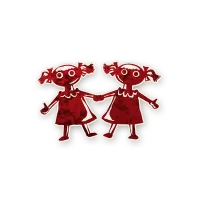
Evil Twin
You & an opposing player know each other. If the good player is executed, evil wins. Good can't win if you both live.
I'm not Sara! I'm Clara! SHE is Sara! Sara is the evil one! Not me!
"You & an opposing player know each other. If the good player is executed, evil wins. Good can't win if you both live." The Evil Twin mirrors a good character, so that the players don't know which twin is good and which twin is evil. The Evil Twin is paired with a good player, chosen by the Storyteller, called the Good Twin. On the first night, the Evil Twin and Good Twin both wake, make eye contact, and learn each other’s character. If the Good Twin is executed, evil wins. If the Evil Twin is executed, the game continues. A dead Evil Twin has no ability, so evil doesn’t win if the Good Twin is later executed. Good cannot win while both twins are alive. Even if the Demon is killed, the game continues. Good will need to kill the Evil Twin as well as the Demon to win. If a good player is turned into an Evil Twin, they are still a good player, with an evil player becoming their twin. It doesn’t matter which twin is which character, what matters is their alignment—the good team can execute the evil player safely, but if they execute the good player, evil wins. If both Twins are the same alignment, the Storyteller chooses a new Twin.
How to Run
- While setting up the game, choose a Good Twin by marking any good character with the TWIN reminder. During the first night, wake both Twins. Let them make eye contact. Point at the Evil Twin, then show the Evil Twin token to the Good Twin. Point at the Good Twin, then show the Good Twin’s character token to the Evil Twin. Put them both to sleep.
- While both Twins are alive, the good team cannot win. If a good- aligned Twin is executed, the evil team wins.
Examples & Notes
- If a Pit-Hag creates an Evil Twin during the final night, either make the other Twin the Demon player or a dead player, so that the good team is still able to win.
- It is rarely a good idea to choose a Traveller to be a Twin.
Demon

Imp
Each night*, choose a player: they die. If you kill yourself this way, a Minion becomes the Imp.
We must keep our wits sharp and our sword sharper. Evil walks among us, and will stop at nothing to destroy us good, simple folk, bringing our fine town to ruin. Trust no-one. But, if you must trust someone, trust me.
"Each night*, choose a player: they die. If you kill yourself this way, a Minion becomes the Imp." The Imp kills a player each night, and can make copies of itself... for a terrible price. On each night except the first, the Imp chooses a player to kill. Because most characters act after the Demon, that player will probably not get to use their ability tonight. The Imp, because they're a Demon, knows which players are their Minions, and knows three not-in-play good characters that they can safely bluff as. If the Imp dies, the game ends and good wins. However, if the Imp kills themself at night, they die and an alive Minion becomes an Imp. This new Imp does not act that same night, but is now the Imp in every other way—they kill each night, and lose if they die.
How to Run
- Each night except the first, wake the Imp. The Imp points at any player. Put the Imp to sleep. The chosen player dies—put the Imp's DEAD reminder by the chosen player's character token in the Grimoire and put a shroud on it.
- If the Imp killed themself at night, choose an alive Minion and replace their character token with a spare Imp token, changing their character to the Imp. Wake the new Imp, show them the YOU ARE info token, then show them the Imp token. Put the new Imp to sleep.
- At dawn, declare which player died at night. (Do not say how they died.)
- If the Imp attacks a dead player at night, let them do so. Whenever a character's ability says "choose a player," that means that any player—alive or dead—can be chosen. The Imp may be planning on bluffing as the Soldier, and this kind of thing helps their bluff look stronger.
Demon

Vigormortis
Each night*, choose a player: they die. Minions you kill keep their ability & poison 1 Townsfolk neighbor. [-1 Outsider]
All doors are one door. All keys are one key. All cups are one cup, but whosoever drinketh of the water that I give shall never thirst, but the water shall be in him a well springing up into everlasting life.
"Each night*, choose a player: they die. Minions you kill keep their ability & poison 1 Townsfolk neighbor. [-1 Outsider]" The Vigormortis kills their own Minions, but those Minions keep their ability. Every time the Vigormortis kills a Minion, they die but keep their ability for as long as the Vigormortis remains alive. The Witch, Cerenovus, and Pit-Hag still act each night. Somewhat like the No Dashii, the dead Minion’s closest clockwise or closest counterclockwise Townsfolk becomes poisoned, even if they are dead. If the Vigormortis dies or otherwise loses their ability, then those players become healthy again. One Townsfolk per Minion will always be poisoned this way, as neighboring Outsiders, Minions, or Travellers are skipped. The Storyteller chooses which of the two Townsfolk is poisoned. All Minions killed by the Vigormortis keep their ability and poison a Townsfolk, not just the most recent. If a dead Minion becomes a non-Minion character, they no longer poison a Townsfolk and have no ability. If a dead Minion becomes drunk or poisoned, they lose their ability until they become sober and healthy again.
How to Run
- While setting up the game, before putting the character tokens in the bag, remove one Outsider character token and add one Townsfolk character token. (If there are no Outsider tokens to remove, do not add a Townsfolk token.)
- Each night except the first, wake the Vigormortis. They point at any player. Put the Vigormortis to sleep. If the chosen player isn’t a Minion, that player dies - mark them with a DEAD reminder.
- If the chosen player is a Minion, that player dies - mark them with a DEAD reminder and a HAS ABILITY reminder. The closest clockwise or closest counterclockwise Townsfolk to the Minion becomes poisoned - mark them with a POISONED reminder.
Demon

Legion12
Each night*, a player might die. Executions fail if only evil voted. You register as a Minion too. [Most players are Legion]
우리는 겨울날의 차가운 바람이다. 우리는 달 없는 밤의 그림자다. 우리는 네 찻잔 속 독이며, 네 귓가의 속삭임이다. 우리는 어디에나 있다.
"매일 밤*, 플레이어 1명이 죽을 수도 있습니다. 악 플레이어만 투표했다면 처형은 실패합니다. 당신은 하수인으로도 판정됩니다. [대부분의 플레이어는 군단입니다]" 군단은 여러 명의 악마입니다. 권장되는 선과 악의 인원 수는 보통과 정반대입니다. 예를 들어 10인 게임이라면, 대략 군단 7명과 선 플레이어 3명 정도로 구성됩니다. 군단이 아닌 플레이어들은 마을주민과 외지인이 어떤 비율이든 섞여 있을 수 있습니다. 지명에 적어도 선 플레이어 1명이 투표했고, 그 결과 누군가가 죽기 직전이 되었다면 처형은 평소처럼 진행됩니다. 반대로 악 플레이어만 투표했다면, 그 지명의 투표 수는 0표로 취급됩니다. 각 군단 플레이어는 악마이면서 동시에 하수인으로도 판정됩니다. 밤마다 누가 죽을지는 이야기꾼이 정합니다. 살아 있는 선 플레이어가 단 한 명만 남았다면, 선은 더 이상 이길 수 없으므로 이야기꾼은 악의 승리를 선언할 수 있습니다. 이야기꾼은 군단 플레이어들에게 허풍용 캐릭터를 주지 않기로 결정할 수도 있습니다.
How to Run
- 첫날 밤 악마 정보 단계에서, 모든 군단 플레이어가 서로 눈을 마주치게 하세요. 필요하다면 군단이 아닌 플레이어들을 손으로 가리켜 군단이 누가 선인지 알 수 있게 해도 됩니다.
- 첫날 밤을 제외한 매일 밤, 플레이어 1명이 죽도록 정할 수 있습니다.
- 투표를 셀 때는 평소처럼 큰 소리로 수를 세세요. 누군가가 죽기 직전이 될 만큼 표가 나왔더라도 악 플레이어만 투표했다면, 그 지명의 투표 수는 0표라고 선언하세요.
Examples & Notes
- 대부분의 밤에는 선 플레이어보다 군단 플레이어를 죽이는 편이 좋습니다. 선 플레이어를 죽이면 보통 악 팀에 너무 유리해집니다. 목표는 생존자가 3명 남는 상황, 즉 선 2명과 군단 1명이 남는 구도를 만드는 것입니다. 마지막 날에 플레이어들이 처형하지 않았다면, 그날 밤 선 플레이어 1명을 죽여 악이 승리하게 하세요.
- 플레이어들이 "정말 0표가 되는지 시험해 보겠다"며 서로에게 투표를 강요한다면, 0표 지명도 성공한 것처럼 선언하되 실제로는 누가 진짜 죽기 직전인지 비밀리에 기록해 둘 수도 있습니다. 군단의 곧 죽음 알림을 표시해 두었다가 지명 단계가 끝난 뒤 그 플레이어를 처형하면, 군단 게임 특유의 미스터리와 긴장감을 더 잘 살릴 수 있습니다.
Demon

Lleech
Each night*, choose a player: they die. You start by choosing a player: they are poisoned. You die if & only if they are dead.
Tasty, tasty, tasty, tasty, tasty, tasty, tasty, tasty brai- I mean pie! Yes. Tasty pie. That’s what I meant to say.
"Each night*, choose a player: they die. You start by choosing a player: they are poisoned. You die if & only if they are dead." The Lleech lives if their host lives, and dies if their host dies. On the first night, the Lleech chooses a player, who is poisoned for the rest of the game. If this player is alive, the Lleech cannot die. If the Lleech is executed, the Storyteller tells the group that the player lives, but not why. If the player that the Lleech chose dies, the Lleech dies as well. If this means that only one or two players are left alive, good still wins, because the Demon is dead. From the second night onwards, players that the Lleech attacks die but are not poisoned. If a Lleech is created mid-game, they poison a player that night. They must choose an alive player.
How to Run
- During the first night, wake the Lleech. They point at any player. That player is poisoned—mark them with the POISONED reminder. Put the Lleech to sleep.
- Each night except the first, wake the Lleech. They point at any player. That player dies—mark them with the DEAD reminder. Put the Lleech to sleep.
- If the Lleech would die but the player marked with the Lleech’s POISONED reminder is alive, the Lleech does not die. If the player marked with the Lleech’s POISONED reminder is dead, the Lleech dies and the good team wins.
Examples & Notes
- When giving false information to a good player poisoned by the Lleech, make sure this information seems true. If the good player believes it to be false, they will quickly execute themselves and win the game.