Combinatorial Circus
Notes
The Stormcatcher favors the mathematician
The Stormcatcher favors the mathematician
Townsfolk

You start knowing a good player & their character. If the Demon kills them, you die too.
Take a jacket if you go outside, dearie. And your thermos. And your scarf. I have a weak heart, you know. Whatever would I do if you caught cold...or worse?
"You start knowing a good player & their character. If the Demon kills them, you die too." The Grandmother knows who their grandchild is, but if they are killed by the Demon, the Grandmother dies too. During the first night, the Grandmother learns their Grandchild—a good player who is a Townsfolk or Outsider. The Grandchild does not learn that they have a Grandmother. If the Demon kills the Grandchild, the Grandmother dies too. If the Grandchild dies by any other means—such as execution, or another type of death at night—the Grandmother does not also die.
Townsfolk

Each night, choose an alive player: either you or they are drunk until dusk. You can't die.
I'll drink any one of yer under the table! You! The chatterbox! Reckon you can take me? No? Howza 'bout you, Grandma? You ever tried Old McKillys Extra Spiced Rum before? Guaranteed to put hairs on yer chest! Step aboard, aye!
"Each night, choose an alive player: either you or they are drunk until dusk. You can't die." The Sailor is either drunk or getting somebody else drunk. While the Sailor is sober, they can't die. Each night, the Sailor chooses a player, who will probably get drunk. If they choose themself, they lose their “cannot die” ability until they become sober. If the Sailor chooses a dead player accidentally, the Storyteller prompts them to choose again. If the Sailor chooses another player, the Storyteller chooses which player is drunk. If they choose a Townsfolk, the Storyteller will usually make the Townsfolk drunk, but if an Outsider, a Minion, or the Demon is chosen, then the Storyteller will usually make the Sailor the drunk one. While sober, the Sailor cannot die, even if they have not yet woken at night to go drinking.
Townsfolk

Each night, you learn how many players’ abilities worked abnormally (since dawn) due to another character's ability.
Any consistent formal system x, within which a certain amount of elementary arithmetic can be carried out is incomplete; that is, there are statements of the language of x which can neither be proved nor disproved in x. Ergo, you are drunk.
"Each night, you learn how many players' abilities worked abnormally (since dawn) due to another character's ability." The Mathematician knows how many things have gone wrong since dawn today. When an ability does not work in the intended way due to another character's interference, the Mathematician will learn that it happened. They'll learn that something went wrong if a piece of information was false but was supposed to be true, or if an ability should have worked but didn't, due to another character. The Mathematician does not learn which players this happened to, only how many times it happened. The Mathematician does not detect their own ability failing. The Mathematician does not detect drunkenness or poisoning itself, but does detect when drunk or poisoned players' abilities did not work as intended. The Recluse registering as evil to the Chef, and the poisoned Soldier dying from the Imp's attack, would each be detected. The poisoned Empath getting true information would not.
Townsfolk

Each night*, choose 2 players: they can't die tonight, but 1 is drunk until dusk.
Come inside, fair traveller, and rest your weary bones. Drink and be merry, for the legions of the Dark One shall not harass thee tonight.
"Each night*, choose 2 players: they can't die tonight, but 1 is drunk until dusk." The Innkeeper protects people from death at night, but somebody gets drunk in the process. The Innkeeper, like the Monk, makes players safe from being killed by the Demon. They are also safe from death caused by Outsiders, Minions, Townsfolk, and Travellers. The Innkeeper only protects players at night, not the day. One of the two players that the Innkeeper chooses becomes drunk for tonight and the next day. This player may be good or evil, but will almost always be good, depending how your game is going. An Innkeeper that chooses themself might become drunk, which means they have no ability and may die tonight—and the other player they chose to protect isn’t safe either.
Townsfolk
Each night*, choose a player: if they are or become drunk or poisoned tonight, you die.
Welcome, one and all, to the greatest show on earth.
"Each night*, choose a player: if they are or become drunk or poisoned tonight, you die." The Acrobat dies when they find a drunk or poisoned player. Each night except the first, the Acrobat chooses a player. If the chosen player is sober and healthy, nothing happens. If the player is drunk or poisoned, the Acrobat dies. If the Acrobat is drunk or poisoned, they cannot die to their own ability. The Acrobat may choose any player, dead or alive, even themself. If the chosen player is sober and healthy at the time the Acrobat picks, but becomes drunk or poisoned later in the night, the Acrobat dies. The Acrobat does not learn if the player they selected was drunk, or poisoned, or both. The Drunk registers as drunk to the Acrobat.
Townsfolk

Each night*, choose an alive player. If good, they die & the Demon doesn’t kill tonight. One good player registers as evil.
Beneath the thin veneer of civilisation lies a howling madness.
"Each night*, choose an alive player. If good, they die & the Demon doesn’t kill tonight. One good player registers as evil." The Lycanthrope roams at night, killing the innocent, whilst the Demon cowers indoors. The Lycanthrope must choose an alive player each night. If the Lycanthrope chooses a dead player, the Storyteller shakes their head no and prompts the Lycanthrope to choose a different player. If the player that the Lycanthrope chooses is good, that player dies, and the Demon cannot kill tonight. If the player the Lycanthrope attacks is evil, that player does not die, and the Demon may still kill tonight. If the Lycanthrope attacks a good player but that good player doesn’t die, the Demon may still kill tonight. While the Lycanthrope lives, one good player registers as evil. They cannot be killed by the Lycanthrope. This evil-registration does not effect win conditions. The good player that registers as evil still wins or loses with the good team.
Townsfolk

Each day, you may make a public statement. Tonight, if it was true, a player dies.
Blah blah blah blah blah blah blah blah blah blah blah blah blah blah blah blah blah blah blah blah blah blah blah blah blah. Blah.
"Each day, you may make a public statement. Tonight, if it was true, a player dies." The Gossip deliberately speaks lies, in the hope of uncovering the truth. Each day, the Gossip may make a public statement. If this statement is true, the Storyteller kills a player that night. If it is false, then no players die due to the Gossip. Mumbled words, whispers, statements the Storyteller doesn’t know are true or false, or statements that someone cannot hear don’t count. Like the Slayer’s ability, the Storyteller and every player must be able to hear and understand the Gossip and be aware that the Gossip is using their ability in order for the Storyteller to judge what happens next. If the Gossip made a true statement during the day while drunk or poisoned, but is sober and healthy when their ability triggers that night, the Storyteller still kills a player.
Townsfolk

Once per game, at night, choose a character: they are drunk for 3 nights & 3 days.
I am more afraid of an army of one hundred sheep led by a lion than an army of one hundred lions led by a sheep.
"Once per game, at night, choose a character: they are drunk for 3 nights & 3 days." The Courtier gets a character drunk, without knowing which player it is. Once per game, the Courtier chooses a character to be drunk for three nights and three days, starting immediately. The Courtier does not learn if they were successful or not, so they might choose a character that is not in play. The Courtier chooses a character, not a player. The Courtier player may need to be reminded of this. Evil players bluffing as the Courtier may also need to be reminded. If the drunk or poisoned Courtier chooses a character, that character is not drunk, even if the Courtier later becomes sober and healthy. If the Courtier made a character drunk, but the Courtier becomes drunk or poisoned, the player they made drunk becomes sober again. If the Courtier becomes sober and healthy again before the three nights and three days have ended, that player becomes drunk yet again.
Townsfolk

You have the ability of the recently killed executee. If they are evil, you are poisoned until a good player dies by execution.
I don’t like clowns. They taste funny.
"You have the ability of the recently killed executee. If they are evil, you are poisoned until a good player dies by execution." The Cannibal eats executed characters, gaining their ability. If a good player dies by execution, the Cannibal gains that player’s ability. If an evil player dies by execution, the Cannibal only thinks that they gain an ability, since the Cannibal is poisoned. The Storyteller may be lying to them. Each time a player dies by execution, the Cannibal loses the ability of the previous player. Executing a dead player won’t grant the Cannibal an ability. Executing a living player who doesn’t die won’t grant the Cannibal an ability. A player must be executed and die for the Cannibal to gain their ability. The Cannibal is not told which ability they have gained. They must figure that out for themselves. If the Cannibal has an “even if dead” ability, such as the Recluse, or an ability that implies it works while dead, such as the Ravenkeeper or Sweetheart, the Cannibal keeps that ability when they die, but loses their Cannibal ability.
Townsfolk

When a Minion dies by execution, all other players (except Travellers) are drunk until dusk tomorrow.
And I shall hear, tho' soft you tread above me... And all my dreams will warm and sweeter be... If you'll not fail to tell me that you love me... I simply sleep in peace until you come to me.
"When a Minion dies by execution, all other players (except Travellers) are drunk until dusk tomorrow." The Minstrel makes everybody drunk if a Minion dies. If a Minion is executed and dies, all players (except the Minstrel) become drunk immediately and stay drunk all through the night and all the following day. Townsfolk, Outsiders, Minions, and even Demons become drunk, but not Travellers. This doesn’t happen if a Minion died at night. If a dead Minion is executed, the Minstrel ability does not trigger—a dead character cannot die again! If a Minion is executed but does not die, the Minstrel’s ability does not trigger. If the Minstrel is drunk or poisoned when a Minion dies by execution, the Minstrel ability does not trigger.
Townsfolk
If both your alive neighbors are good, they can't die.
If you are cold, tea will warm you. If you are too heated, tea will cool you. If you are depressed, tea will cheer you. If you are excited, tea will calm you.
"If both your alive neighbors are good, they can't die." The Tea Lady protects her neighbours from death... as long as they are good. If both alive neighbours of the Tea Lady are currently good, those neighbours cannot die. The Demon cannot kill them, nor the Godfather, nor the Gossip. If they are executed, they do not die. The only exception is the Assassin, who can kill someone protected from death. The Tea Lady’s alive neighbours are the two alive players closest to the Tea Lady—one clockwise and one counterclockwise. Skip past any dead neighbours. However, if either alive neighbours is evil, or both are, then the Tea Lady does not protect her alive neighbours . If an evil player dies and the Tea Lady is now neighbouring two good players, then neither can die.
Townsfolk

처음으로 죽게 될 때, 죽지 않습니다.
Not written yet.
Townsfolk

악마는 당신이 하수인이라고 생각합니다. 하수인은 당신이 악마라고 생각합니다.
Not written yet.
Outsider

You think you are a Demon, but you are not. The Demon knows who you are & who you choose at night.
I am the night... I think.
"You think you are a Demon, but you are not. The Demon knows who you are & who you choose at night." The Lunatic thinks that they are the Demon. Much like the Drunk, the Lunatic does not know their real character or real alignment. They are woken each night to attack as if they were the Demon that is in play, but their choices have no effect because they have no Demon ability. The Lunatic wakes during the first night to learn three bluffs and the appropriate number of Minions, but this information may be wrong. The real Demon knows which players the Lunatic chose to attack each night.
Outsider

You might die at any time.
I think I see the problem. Luckily, I have an idea! This catapult will shoot twice as far with just a minor adjustment...
"You might die at any time." The Tinker can die at any time, for no reason. The Storyteller may kill the Tinker at any time. The Tinker cannot die from their ability while protected from death, as normal.
Outsider
당신은 하수인이나 악마로 보일 수도 있습니다. 이 능력은 당신이 죽어도 유지됩니다.
Not written yet.
Outsider

When you die, the Storyteller gains a Minion ability.
Pleauze shtay shtill. Thinks nid tiime for hillink. Myrhh-myrhh.
"When you die, the Storyteller gains a Minion ability." The Plague Doctor brings an extra Minion ability into play. The Storyteller chooses which Minion ability is gained. This ability is in effect for the rest of the game. Nothing else changes for the Storyteller – they don’t become evil, they don’t become a player, they are not a legitimate player to be targeted by other abilities, and they cannot vote or nominate. If the Plague Doctor is drunk or poisoned when they die, the Storyteller doesn’t gain a Minion ability, even when the Plague Doctor becomes sober and healthy.
Minion

You start knowing which Outsiders are in play. If 1 died today, choose a player tonight: they die. [-1 or +1 Outsider]
Normally, it's just business. But when you insult my daughter, you insult me. And when you insult me, you insult my family. You really should be more careful - it would be a shame if you had an unfortunate accident.
"You start knowing which Outsiders are in play. If 1 died today, choose a player tonight: they die. [-1 or +1 Outsider]" The Godfather takes revenge when the town kills Outsiders. Whenever an Outsider is executed and dies, the Godfather chooses one player to die that night. The Godfather only kills if an Outsider dies during the day. Outsiders that die at night don’t count. If the Godfather is in play, this adds or removes one Outsider from play. At the start of the game, the Godfather learns which Outsiders are in play. If two Outsiders died today, the Godfather still only kills one player tonight.
Minion

Each night, choose a living player (different to last night): if executed tomorrow, they don't die.
My client, should the objection be overruled, pleads innocent by virtue of the prosecution's non-observance of statute 27.B - incorrect or misleading conjugation of a verb. The fact that nine of the jury died last night is simply prima facie, which is, as Wills vs Thule set precedent for, further reason to acquit.
"Each night, choose a living player (different to last night): if executed tomorrow, they don't die." The Devil's Advocate saves players from execution. Each night, the Devil’s Advocate chooses a player to protect from death by execution. The next day, if that player is executed, the execution succeeds but the player remains alive. The Devil’s Advocate cannot choose the same player two nights in a row, whether or not that player was saved from execution today, and they cannot choose a Zombuul that registers as dead.
Minion

Once per game, at night*, choose a player: they die, even if for some reason they could not.
...
"Once per game, at night*, choose a player: they die, even if for some reason they could not." The Assassin kills who the Demon cannot. Once per game at night, the Assassin can kill a player. This player dies, even if they are protected from death in any way, such as from an ability. The Assassin ability is affected by drunkenness and poisoning, as normal. If the Assassin attacks the Goon, the Goon dies and turns evil.
Minion
The Demon (even if drunk or poisoned) has a not-in-play good character’s ability. You both know which.
Stellar hydrogen, vast, inert; carbon, oxygen, neon gases, all ruined. Molecular chaos, entropy, yields new cosmic phenomena, rebirth from atomic chaos, dense matter collapsing. All in a teeny little bottle.
"The Demon (even if drunk or poisoned) has a not-in-play good character's ability. You both know which." The Boffin replicates a good ability. While the Boffin is alive, the Demon has a single Townsfolk ability or Outsider ability. If the Demon is drunk or poisoned, the Demon keeps this good ability. If the Boffin is drunk or poisoned, the Demon temporarily loses this good ability. If the Demon dies and has an ability that functions while dead, such as the Sweetheart, the Demon keeps this ability. If a new Demon is created, such as via a Scarlet Woman or a Barber, this new Demon has an ability from the Boffin. This ability may be different to the previous Demon's ability. If there are multiple Demons alive, only one alive Demon has an ability from the Boffin. If the Demon has an ability that modifies the setup, such as a Choirboy, these changes are made during setup, as normal. Both the Demon and the Boffin learn which good ability the Demon has. The Storyteller may wake these players independently, or together. The not-in-play character may be 1 of the Demon's 3 bluffs. The Demon also wakes at night at the time that the good character would normally wake.
Demon

Each night, choose a player: they are poisoned. The previously poisoned player dies then becomes healthy.
You truly have been kind welcoming me into your beautiful home. I am so sorry I accidentally scratched you. A little thing. No matter. But please, take this golden toothpick as a humble token of my regret.
"Each night, choose a player: they are poisoned. The previously poisoned player dies then becomes healthy." The Pukka poisons its victims, who die at a later time. When the Pukka attacks, their victim is poisoned immediately. The next night, just after the Pukka attacks again, that player dies. Unlike other Demons, the Pukka acts during the first night. The Exorcist prevents the Pukka from waking to poison a player. The Innkeeper prevents the Pukka from killing a poisoned player, then that player is no longer poisoned. If the Pukka is drunk and chooses a player, that player does not become poisoned, so does not die the following night. If the Pukka was sober when they chose a player the previous night, but is drunk at night, that player does not die. But when the Pukka sobers up, the poison resumes and kills the player at night.
Demon
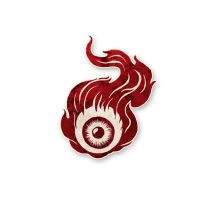
Each night*, choose a character: they die. If they are not in play, the Storyteller chooses who dies.
Like a bonfire on a moonless night… I see you, mortal.
"Each night*, choose a character: they die. If they are not in play, the Storyteller chooses who dies." The Ojo chooses specifically which character dies. Unlike other Demons, the Ojo must choose a character, not a player. The Storyteller may need to remind the player of this. We recommend that all players have their character sheet handy during the night phase. The Ojo can kill evil characters, if they wish. If there are multiple copies of a particular character in play, and the Ojo chooses that character to die, only one of those characters dies. If the Ojo chooses a character that is not in play, the Storyteller will almost always kill a living good player. It is possible, but uncommon, for the Storyteller to choose a dead player or an evil player to die.
Demon
Each night*, you may choose a player: they die. If your last choice was no-one, choose 3 players tonight.
Would you like a flower? I'm so lonely.
"Each night*, you may choose a player: they die. If your last choice was no-one, choose 3 players tonight." The Po can choose to attack nobody at night, but goes on a rampage the following night. The Po attacks one player per night, like many other Demons. However, if the Po chooses to attack nobody, then they may attack three players the following night. If the Po was drunk or poisoned when they chose nobody last night, they still choose three players tonight. A Po must choose three players when prompted to do so. They cannot choose no one again. The Po only gets three attacks if they chose nobody. The Po does not get three attacks if they chose to attack someone the previous night, but that player did not die. The Po doesn’t act on the first night, but this night does not count as a night where the Po “chose no one.” If the Exorcist selects the Po, the Po does not act, but this night does not count as a night where the Po “chose no one.” However, if the Po chose no one the night before the Exorcist chose the Po, the Po chooses three players the night after the Exorcist chose the Po, because their last choice was no one.
Demon

매일 밤*, 만약 오늘 낮에 아무도 죽지 않았다면, 참가자 1명을 선택합니다. 해당 참가자는 죽습니다. 당신이 처음 죽을 때, 실제로는 살아있지만 죽은 것처럼 취급됩니다.
Not written yet.
Loric

One or more players each have a goal. When achieved, that player learns a piece of true info.
The universe is a verb not a noun, they say, and it is turtles, turtles all the way down. Turtles all the way down, my friend, turtles all the way down.
"One or more players each have a goal. When achieved, that player learns a piece of true info." The Zenomancer gives mini quests. One or more players may be given goals by the Storyteller. These goals are given privately. They may be given goals at the beginning of the game, or at some time during the game. Different players may be given goals at different times. A goal can be anything. It can be something to do with the game, or something beyond the game. The Storyteller is the judge of when a goal is achieved. When this happens, the player learns one piece of information about the game. This is true even if they are drunk or poisoned, since this is due to the Zenomancer, not their character. Goals may clash, or may not be achieved. Usually, 1 to 3 goals will be given throughout the game, and most goals will be given at the beginning of the game. Players may bluff that they have been given goals, or bluff that they have achieved a goal. Any player may be given a goal, even Travellers and dead players.
Loric
Name a good character. If in play, they can only die by execution, but evil players learn which player it is.
At dawn, the temple’s long shadow creeps to the fountain. At dusk, the obelisk blocks the red glare, cooling warm water under the archway. All lines converge here. A storm is coming, and this, this pebbled and lush and holy place between the apple trees, is the eye.
"Name a good character. If in play, they can only die by execution, but evil players learn which player it is." Use the Storm Catcher to focus the game on a particular good character. If you want to construct a script based around the actions or information of one particular good character, if you want to have this character in every game (or at least have an evil player bluffing as this character), you can use the Storm Catcher. Your chosen character will play a big part in the game, will be the focus of a lot of group discussion, and will probably live until the final day. The Storyteller declares that one character can’t die, unless by execution. This character may be in play, or not in play. If it is in play, this good player lives as long as the good players want them to, since evil players cannot kill them. If it is not in play, all evil players learn this, so any evil player can easily bluff as this character. (They don’t have to, but they can.)