Townsfolk

Pixie
You start knowing 1 in-play Townsfolk. If you were mad that you were this character, you gain their ability when they die.
Round and round the garden, go. Little girls run to and fro. Little boys climb up the tree. Which of these should Pixie be? Ladies smile and go to town. Lords with axe chop forest down. What’s yours is mine. What’s mine, divine. Silly little Pixie, me.
"You start knowing 1 in-play Townsfolk. If you were mad that you were this character, you gain their ability when they die." The Pixie pretends to be the same character as someone else. On the first night, the Pixie learns an in-play Townsfolk. The Storyteller chooses which Townsfolk this is. The Pixie does not learn which player is this character. If the Pixie player pretends that they are this Townsfolk, they gain the ability of this Townsfolk when the Townsfolk dies. They could have spoken loudly about being the character for one day, or pretended to be the character each day this game, or accused the Townsfolk of being a liar—the Storyteller is the judge of whether or not the player was convincing, by “being mad that they are this character”. When the Townsfolk player dies, the Pixie does not learn this, and is not told that they have gained a new ability. They may learn this has happened if they wake at night and start gaining information, or are prompted to choose players. If the player the Pixie learns about changes character then dies, the Pixie gains the ability of the Townsfolk the Pixie learnt about, not the new character.
How to Run
- During the first night, mark a Townsfolk character token with the Pixie’s MAD reminder. Wake the Pixie. Show the Pixie this Townsfolk character token. Put the Pixie to sleep.
- If the Townsfolk marked MAD dies, and you feel that the Pixie player has been sufficiently mad that they were this character, replace the MAD reminder with the HAS ABILITY reminder. The Pixie now has this Townsfolk’s ability, and will wake at night when this Townsfolk would normally wake.
Townsfolk

Balloonist
Each night, you learn a player of a different character type than last night. [+0 or +1 Outsider]
More heat! Higher! Higher! Più alto! Ahhh... it is so beautiful from up here, don't you agree? Can you see the children fishing by the river, under the willow? Can you see the glint of the sun on the circus tent-poles? What's this? An old man, alone, passed out in the vineyard? Less heat! Lower! Lower! Vai più in basso!
"Each night, you learn a player of a different character type than last night. [+0 or +1 Outsider]" The Balloonist learns players of different character types. Each time the Balloonist learns a player, the player must have a different character type to the previously shown player. The Balloonist does not learn the character type of the player they learn. The shown player can be alive or dead. The shown player can be good or evil. If the Balloonist is drunk or poisoned, they may learn a character of the same type as the previously shown player. When the Balloonist becomes sober and healthy, they must learn a player of a different character type to the previously shown player. During setup, the Storyteller may choose to add an Outsider due to the Balloonist’s ability.
How to Run
- During setup, you may add an Outsider.
- When preparing the first night, mark any player with the KNOW reminder. When preparing each night afterwards, mark a character of a different type than the current with the KNOW reminder.
- Each night, wake the Balloonist. Point to the player marked KNOW. Put the Balloonist to sleep.
Townsfolk

Snake Charmer
Each night, choose an alive player: a chosen Demon swaps characters & alignments with you & is then poisoned.
Effendi... I am but a humble man, but my pipe is golden and a single tune will tame the wildest djinn, Inshallah. They say that greed hangs more men than rope. But not I, Effendi... not I.
"Each night, choose an alive player: a chosen Demon swaps characters & alignments with you & is then poisoned." The Snake Charmer learns player after player that is not the Demon... but becomes the Demon if they get either too greedy or too bold. Each night, they choose a player. If that player is not the Demon, nothing happens. If they are the Demon, the Snake Charmer becomes that Demon and turns evil, and the Demon becomes good and poisoned permanently. If the Philosopher has the Snake Charmer ability and becomes the Demon, the Demon becomes a poisoned Philosopher.
How to Run
- Each night, wake the Snake Charmer. They point at any player.
- If that player is not the Demon, nothing happens. Put the Snake Charmer to sleep.
- If that player is the Demon, the old Snake Charmer changes into the new (evil) Demon, and the old Demon changes into the new (good) Snake Charmer—swap the Snake Charmer token and the Demon’s token. The new Snake Charmer is poisoned - mark them with the POISONED reminder. Wake the new Demon and show them the YOU ARE info token, a thumbs-down, the YOU ARE token, then the Demon’s token. (This shows they are now evil and the Demon.) Put the new Demon to sleep. Wake the new Snake Charmer and show them the YOU ARE info token, a thumbs-up, the YOU ARE info token, then the Snake Charmer token. (This shows they are now good and the Snake Charmer.) Put the new Snake Charmer to sleep.
Examples & Notes
- In the strange situation that the Snake Charmer is evil, or the Demon good, swap their alignments as appropriate.
Townsfolk

Mathematician
Each night, you learn how many players’ abilities worked abnormally (since dawn) due to another character's ability.
Any consistent formal system x, within which a certain amount of elementary arithmetic can be carried out is incomplete; that is, there are statements of the language of x which can neither be proved nor disproved in x. Ergo, you are drunk.
"Each night, you learn how many players' abilities worked abnormally (since dawn) due to another character's ability." The Mathematician knows how many things have gone wrong since dawn today. When an ability does not work in the intended way due to another character's interference, the Mathematician will learn that it happened. They'll learn that something went wrong if a piece of information was false but was supposed to be true, or if an ability should have worked but didn't, due to another character. The Mathematician does not learn which players this happened to, only how many times it happened. The Mathematician does not detect their own ability failing. The Mathematician does not detect drunkenness or poisoning itself, but does detect when drunk or poisoned players' abilities did not work as intended. The Recluse registering as evil to the Chef, and the poisoned Soldier dying from the Imp's attack, would each be detected. The poisoned Empath getting true information would not.
How to Run
- Each time a character's ability works abnormally due to another character's ability, mark them with an ABNORMAL reminder.
- Each night, wake the Mathematician. Show fingers (0, 1, 2, etc.) equaling the number of characters with ABNORMAL reminders. Put the Mathematician to sleep. Remove all ABNORMAL reminders.
Townsfolk

Fortune Teller
Each night, choose 2 players: you learn if either is a Demon. There is a good player that registers as a Demon to you.
I sense great evil in your soul! But... that could just be your perfume. I am allergic to Elderberry.
"Each night, choose 2 players: you learn if either is a Demon. There is a good player that registers as a Demon to you." The Fortune Teller detects who the Demon is, but sometimes thinks good players are Demons. Each night, the Fortune Teller chooses two players and learns if at least one of them is a Demon. They do not learn which of them is a Demon, just that one of them is. If neither is the Demon, they learn this instead. Unfortunately, one player, called the Red Herring, will register as a Demon to the Fortune Teller if chosen. The Red Herring is the same player throughout the entire game. This player may be any good player, even the Fortune Teller themself, and the Fortune Teller does not know which player it is. The Fortune Teller may choose any two players—alive or dead, or even themself. If they choose a dead Demon, then the Fortune Teller still receives a nod.
How to Run
- While preparing the first night, put the Fortune Teller's RED HERRING reminder token by any good character token, marking that player as the Red Herring.
- Each night, wake the Fortune Teller. The Fortune Teller points at any two players. If either chosen player is a Demon or the Red Herring, nod your head yes. Otherwise, shake your head no. Put the Fortune Teller to sleep.
- In smaller games, making the Fortune Teller their own Red Herring is sometimes advised, as the Fortune Teller gets more information that way.
Townsfolk

Cult Leader
Each night, you become the alignment of an alive neighbor. If all good players choose to join your cult, your team wins.
Thinking themselves wise, they became fools.
"Each night, you become the alignment of an alive neighbor. If all good players choose to join your cult, your team wins." The Cult Leader wins if everyone joins their cult. At the end of each night, the Cult Leader becomes the alignment of a living neighbor. Once per day, the Cult Leader may publicly choose to form a cult. If all good players vote to join the cult, the game ends immediately and the Cult Leader’s team wins. The Cult Leader may form a cult at any point in the day. Voting to join a cult does not require a vote token. Players may say whatever they want at any time, so a player bluffing as the Cult Leader may pretend to form a cult.
How to Run
- Each night, turn the Cult Leader character token right side up (if both alive neighbors are good) or upside down (if both alive neighbors are evil) or either (if one alive neighbor is good and the other alive neighbor is evil). If the Cult Leader's alignment changes, wake the Cult Leader and give a thumbs up or a thumbs down, then put the Cult Leader to sleep. If the Cult Leader’s alignment doesn’t change, do not wake them.
- During the day, the Cult Leader may declare that they wish to use their ability. If so, enter the circle and run a vote in the same way that you would for an Exile. If all good players raise their hand, declare which team has won. If not all good players raise their hand, nothing happens.
Townsfolk

Monk
Each night*, choose a player (not yourself): they are safe from the Demon tonight.
'Tis an ill and deathly wind that blows tonight. Come, my brother, take shelter in the abbey while the storm rages. By my word, or by my life, you will be safe.
"Each night*, choose a player (not yourself): they are safe from the Demon tonight." The Monk protects other players from the Demon. Each night except the first, the Monk may choose to protect any player except themself. If the Demon attacks a player who has been protected by the Monk, then that player does not die. The Demon does not get to attack another player—there is simply no death tonight. The Monk does not protect against the Demon nominating and executing someone.
How to Run
- Each night except the first, wake the Monk. The Monk points at any player except themself. (If the Monk points at themself, shake your head no and prompt them to point at another player.) Put the Monk to sleep. Put the Monk's SAFE reminder token by the chosen player's character token.
- If the Demon attacks the player marked SAFE, the player remains alive. (Do not mark them with the Demon's DEAD reminder token or add a shroud as you normally would.) At dawn, declare that no one died at night. (Do not say why.)
- At dawn, remove the SAFE reminder token.
- In other editions, Demons may have abilities other than killing. The Monk's protection also prevents all other harmful effects of the Demon's ability, such as poisoning or turning the protected player evil.
Townsfolk

Gossip
Each day, you may make a public statement. Tonight, if it was true, a player dies.
Blah blah blah blah blah blah blah blah blah blah blah blah blah blah blah blah blah blah blah blah blah blah blah blah blah. Blah.
"Each day, you may make a public statement. Tonight, if it was true, a player dies." The Gossip deliberately speaks lies, in the hope of uncovering the truth. Each day, the Gossip may make a public statement. If this statement is true, the Storyteller kills a player that night. If it is false, then no players die due to the Gossip. Mumbled words, whispers, statements the Storyteller doesn’t know are true or false, or statements that someone cannot hear don’t count. Like the Slayer’s ability, the Storyteller and every player must be able to hear and understand the Gossip and be aware that the Gossip is using their ability in order for the Storyteller to judge what happens next. If the Gossip made a true statement during the day while drunk or poisoned, but is sober and healthy when their ability triggers that night, the Storyteller still kills a player.
How to Run
- Each day, if the Gossip makes a definite, true public statement, put the Gossip’s DEAD reminder in the center of the left side of the Grimoire as a reminder to yourself to place it tonight.
- Each night except the first, if the Gossip made a definite, true public statement today, you choose any player. The chosen player dies—mark them with the DEAD reminder.
Examples & Notes
- When choosing a player to die due to the Gossip ability, we recommend that you choose a character that will actually die, not one protected from death by an ability (like the Fool or Tea Lady). The Gossip gains knowledge when their statement caused a death. This is more helpful to the good team, and more fun for everyone.
Townsfolk

Savant
Each day, you may visit the Storyteller to learn 2 things in private: 1 is true & 1 is false.
Seventy-two matchsticks on the floor... the sun sets early but the moon is unchanged... a torn piece of cloth... evil in the manor house... three by three... the one we trusted is not what he seems... green light means magnesium... residue, but the pattern is wrong... Seventy-two matchsticks on the floor...
"Each day, you may visit the Storyteller to learn 2 things in private: 1 is true & 1 is false." The Savant gets crazy, amazing information that is different every day and every game, but exactly half of it is completely false. Each day, the Storyteller chooses two pieces of information to give the Savant... so get creative! One must be true, and one must be false, and the Savant won’t know which is which. It is up to the Savant to talk with the Storyteller, not the other way around. This isn’t a public conversation, and the group can’t listen in. It’s private. The Savant can choose to not visit the Storyteller if they wish. A drunk or poisoned Savant might get two pieces of true information or two pieces of false information.
How to Run
- Once per day, if the Savant requests a private chat with you, take them away from the circle so you cannot be overheard. Whisper two pieces of information, one true and one false, to the Savant. (If you cannot think of two straight away, either take your time or ask them to come back in a few minutes.)
Examples & Notes
- Keep the information you give helpful and related to the game. Avoid saying who exactly the Demon is, or it could be a very short game. If you need help on choosing what to say, give information similar to what Townsfolk abilities would provide.
Townsfolk

Philosopher
Once per game, at night, choose a good character: gain that ability. If this character is in play, they are drunk.
If anything is real, beer is real. Drink, for tomorrow we may die.
"Once per game, at night, choose a good character: gain that ability. If this character is in play, they are drunk." The Philosopher has no ability until they decide which character they want to emulate. They can do this once per game. When they do so, they gain that character’s ability. They do not become that character. They may want to wait a while to choose. If the Philosopher chooses a character that is already in play, the player of that character becomes drunk. If the Philosopher then dies or becomes drunk or poisoned, the player they are making drunk becomes sober again. If the Philosopher chose a character that was not in play at the time but is in play now, that character is drunk. If the Philosopher gains an ability that works at night, they wake when that character would wake. If this ability is used on the first night only, they use it tonight. If the Philosopher regains their ability via the Bone Collector, or uses their ability twice via the Barista, the Philosopher may choose a new ability, or the same ability as before. If the Philosopher’s ability works while dead, such as the Klutz’s, it works if the Philosopher is dead.
How to Run
- Each night, wake the Philosopher. They either shake their head no or point at any Townsfolk icon or any Outsider icon on their character sheet. Put the Philosopher to sleep.
- If they pointed to an icon of a character not in play, swap the Philosopher token with the chosen character token and mark them with the IS THE PHILOSOPHER reminder.
- If they pointed to an icon of a character in play, the player of the chosen character becomes drunk - mark them with the DRUNK reminder. (You can now use the duplicated character’s reminders for the Philosopher). If the Philosopher dies, the player made drunk by the Philosopher becomes sober - remove the DRUNK reminder.
Townsfolk

Princess1-75
첫날 낮, 당신이 플레이어를 지명하고 처형했다면, 악마는 오늘 밤 죽이지 않습니다.
Not written yet.
Townsfolk

Cannibal
You have the ability of the recently killed executee. If they are evil, you are poisoned until a good player dies by execution.
I don’t like clowns. They taste funny.
"You have the ability of the recently killed executee. If they are evil, you are poisoned until a good player dies by execution." The Cannibal eats executed characters, gaining their ability. If a good player dies by execution, the Cannibal gains that player’s ability. If an evil player dies by execution, the Cannibal only thinks that they gain an ability, since the Cannibal is poisoned. The Storyteller may be lying to them. Each time a player dies by execution, the Cannibal loses the ability of the previous player. Executing a dead player won’t grant the Cannibal an ability. Executing a living player who doesn’t die won’t grant the Cannibal an ability. A player must be executed and die for the Cannibal to gain their ability. The Cannibal is not told which ability they have gained. They must figure that out for themselves. If the Cannibal has an “even if dead” ability, such as the Recluse, or an ability that implies it works while dead, such as the Ravenkeeper or Sweetheart, the Cannibal keeps that ability when they die, but loses their Cannibal ability.
How to Run
- If a good player dies by execution, mark them with the LUNCH reminder, and remove the Cannibal’s POISONED reminder if necessary. The Cannibal now has this good player’s ability (do not say which), and will wake at night when this good character would normally wake.
- If an evil player dies by execution, mark them with the LUNCH reminder and mark the Cannibal with the POISONED reminder. The Cannibal is poisoned. You may wake them when this evil character would normally wake, and pretend that they have a new ability.
Examples & Notes
- Pay attention to which character each evil player is bluffing as. If they are executed, then their bluffed ability is the best one to pretend that the Cannibal has gained.
Townsfolk

Amnesiac
You do not know what your ability is. Each day, privately guess what it is: you learn how accurate you are.
Wait. What. Who? Oh, ok. Wait. What?
"You do not know what your ability is. Each day, privately guess what it is: you learn how accurate you are." The Amnesiac doesn’t know their own ability. The Storyteller decides what the Amnesiac’s ability is. It may be the same ability as another character in Blood On The Clocktower, something similar, or something original. The Amnesiac may wake at any time during the night to learn information or to choose a player, or their ability may be passive—not requiring action from the Amnesiac player. Each day, the Amnesiac talks to the Storyteller in private, and makes a guess as to what their ability is. The Storyteller answers “cold” if the guess is very wrong, “warm” if the guess is on the right track, “hot” if the guess is very close, and “bingo” if the guess is spot on. Their guess may be specific, such as “Am I learning two players each night that are the same alignment?”, or vague, such as “Is my ability something to do with dead players?”
How to Run
- During setup, decide what ability the Amnesiac player has. During the game, treat that player as if they had that ability, waking them when needed, prompting them to choose players when needed, or whatever else is appropriate. Use the Amnesiac’s ? reminders if you need to.
- Each day, the Amnesiac makes a guess about their ability in private. Answer “Cold”, “Warm”, “Hot", or “Bingo”.
Examples & Notes
- Make the Amnesiac’s ability guessable, so that the Amnesiac can figure out what their ability is over time. Learning a piece of information each night, or a power that affects the game in a way that the Amnesiac notices, are both good ideas.
- If the Amnesiac guesses their ability, but the wording is different, still tell them they guessed correctly.
- You can make the Amnesiac’s ability slightly better than a normal Townsfolk’s ability. Not knowing what it is, the player will need to work harder to receive its full benefit.
Outsider

Recluse1-75
당신은 하수인이나 악마로 보일 수도 있습니다. 이 능력은 당신이 죽어도 유지됩니다.
Not written yet.
Outsider

Moonchild
When you learn that you died, publicly choose 1 alive player. Tonight, if it was a good player, they die.
Scorpio looks sideways at the lovers, and you have a choice to make. With silver cross my palm, and your fate shall be revealed. With steel cross my throat, and by the stars you shall regret it.
"When you learn that you died, publicly choose 1 alive player. Tonight, if it was a good player, they die." The Moonchild curses someone upon death, killing them too. The Moonchild must choose a player within a minute or two of learning that they are dead, whether by an execution or at dawn when the Storyteller declares who died at night. The Moonchild can take their time and get advice from the group before making this decision. If the Moonchild chooses a good player, that player dies tonight. If they choose an evil player, nothing happens. As always, play along if an evil player is bluffing as the Moonchild and pretends to use their ability. It is not the Storyteller’s responsibility to prompt the Moonchild to choose a player. The Moonchild must do this shortly after they learn that they are dead. Deliberately not doing so is considered cheating. If the Moonchild is sober and healthy at night but was drunk or poisoned when they chose a player today, that player dies. If the Moonchild is drunk or poisoned at night but was sober and healthy when they chose a player today, that player doesn’t die. The Moonchild kills the Goon if the Goon was good when the Moonchild chose them, regardless of the Goon’s alignment at night.
How to Run
- When you declare that the Moonchild’s player has died, the Moonchild chooses any alive player. If the chosen player is good, mark their character token with the DEAD reminder. Tonight, the player marked with the Moonchild’s DEAD reminder dies.
Examples & Notes
- If the Moonchild doesn’t realize that they must choose a player when they die, privately remind them. New players may not understand how their character works.
Outsider

Zealot1-75
만약 살아있는 플레이어가 5명 이상이라면, 모든 처형 투표에 손을 들어야 합니다.
Not written yet.
Outsider

Puzzlemaster
1 player is drunk, even if you die. If you guess (once) who it is, learn the Demon player, but guess wrong & get false info.
When one begins to think that some thing is merely some other thing, one is usually on the brink of an error. Patience, patience. Don’t confuse just and should with is and isn’t.
"1 player is drunk, even if you die. If you guess (once) who it is, learn the Demon player, but guess wrong & get false info." The Puzzlemaster tries to figure out who is drunk. A player is drunk for the whole game. It will most often be a Townsfolk, but could be an Outsider. This player does not know that they are drunk. Once per game, the Puzzlemaster may guess which player it is. They may guess publicly, or privately. Whatever their guess, the Storyteller privately tells the Puzzlemaster the name of one player. If the Puzzlemaster guessed correctly, they learn which player the Demon is. If the Puzzlemaster guessed incorrectly, they learn a different player instead. The Puzzlemaster isn’t told if they guessed correctly or not. Only the player made drunk by the Puzzlemaster counts as a successful guess. Players drunk by other means don’t count. If the Puzzlemaster dies, the drunk player is still drunk. A dead Puzzlemaster may not make a guess, as they don’t have that part of their ability.
How to Run
- While preparing the first night, mark any player with the Puzzlemaster’s DRUNK reminder. This player is drunk.
- At any time during the game, the Puzzlemaster may guess a player, either publicly or by having a private discussion with you. If their guessed player is marked by the Puzzlemaster’s DRUNK reminder, privately tell the Puzzlemaster which player is the Demon. If their guessed player is not marked by the Puzzlemaster’s DRUNK reminder, privately tell the Puzzlemaster the name of a non-Demon player. (Do not say if they guessed correctly or not.) Either way, mark the Puzzlemaster with the GUESS USED reminder.
Examples & Notes
- While you can make a Minion or the Demon drunk with the Puzzlemaster ability, only do this if you have an excellent reason in mind. It is almost always best to select a Townsfolk player.
Minion

Psychopath1 75 2-75
매일 낮, 지명 전에 공개적으로 참가자를 1명 선택할 수 있습니다. 해당 참가자는 죽습니다. 처형되면, 당신은 지명자와 가위바위보를 해서 졌을 때만 죽습니다.
Not written yet.
Minion

Wraith
You may choose to open your eyes at night. You wake when other evil players do.
Ra'āb ina pān ṣilli ša dāri. Rigim qallu ina šūri, šītu ša šunātīka iredde, u napšutka idlul ina pān maṣṣartī dāriti.
"You may choose to open your eyes at night. You wake when other evil players do." The Wraith knows and shares what happens at night. The Wraith may open their eyes at any point during the night, for as long or as short a time as they wish. They may open their eyes fully, or just peek. The Storyteller wakes the Wraith when other evil players also wake, such as when the Demon kills a player, an evil Traveller uses their ability, or a Cult Leader learns that they are evil. When several players have their eyes open at once, they may communicate if they wish. If a good player catches the Wraith with their eyes open, there is no mechanical effect. A dead Wraith may not open their eyes at night. A drunk or poisoned Wraith is told by the Storyteller that they may not open their eyes that night.
How to Run
- Each time you wake an evil player at night, first wake the Wraith. When you put that evil player to sleep, put the Wraith to sleep.
- If the Wraith loses their ability while alive, privately tell the Wraith that they may not choose to open their eyes tonight, and do not wake them when other evil players wake.
Examples & Notes
- Optional rule: Once per game, a player that is mad that you are the Wraith, dies.
Minion
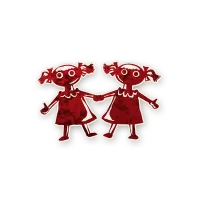
Evil Twin
You & an opposing player know each other. If the good player is executed, evil wins. Good can't win if you both live.
I'm not Sara! I'm Clara! SHE is Sara! Sara is the evil one! Not me!
"You & an opposing player know each other. If the good player is executed, evil wins. Good can't win if you both live." The Evil Twin mirrors a good character, so that the players don't know which twin is good and which twin is evil. The Evil Twin is paired with a good player, chosen by the Storyteller, called the Good Twin. On the first night, the Evil Twin and Good Twin both wake, make eye contact, and learn each other’s character. If the Good Twin is executed, evil wins. If the Evil Twin is executed, the game continues. A dead Evil Twin has no ability, so evil doesn’t win if the Good Twin is later executed. Good cannot win while both twins are alive. Even if the Demon is killed, the game continues. Good will need to kill the Evil Twin as well as the Demon to win. If a good player is turned into an Evil Twin, they are still a good player, with an evil player becoming their twin. It doesn’t matter which twin is which character, what matters is their alignment—the good team can execute the evil player safely, but if they execute the good player, evil wins. If both Twins are the same alignment, the Storyteller chooses a new Twin.
How to Run
- While setting up the game, choose a Good Twin by marking any good character with the TWIN reminder. During the first night, wake both Twins. Let them make eye contact. Point at the Evil Twin, then show the Evil Twin token to the Good Twin. Point at the Good Twin, then show the Good Twin’s character token to the Evil Twin. Put them both to sleep.
- While both Twins are alive, the good team cannot win. If a good- aligned Twin is executed, the evil team wins.
Examples & Notes
- If a Pit-Hag creates an Evil Twin during the final night, either make the other Twin the Demon player or a dead player, so that the good team is still able to win.
- It is rarely a good idea to choose a Traveller to be a Twin.
Minion

Vizier
All players know you are the Vizier. You cannot die during the day. If good voted, you may choose to execute immediately.
An excellent decision, as always, sire. Such a petty crime as bumping into the Bishop indeed deserves your ‘justice’ and ‘mercy’. Take a stroll in the gardens. Visit the gallery and peruse the sculptures of Von Strauf. Relax, sire. Leave everything… to me.
"All players know you are the Vizier. You cannot die during the day. If good voted, you may choose to execute immediately." The Vizier executes players without the town’s consent. On the first day, all players learn that the Vizier is in play, and which player it is. During the day, the Vizier can not die by any means. After a vote is tallied, if the Vizier chooses to execute the nominee (and at least one good player voted), they are executed immediately. This counts as the 1 execution allowed each day. After a vote is tallied, if the Vizier chooses to execute the nominee (and no good players voted), nothing happens. Even if the vote tally is less than 50% of the living players, the Vizier may still execute. Even if another player has more votes than the current player, the Vizier may still execute. The Vizier does not have to force an execution each day.
How to Run
- When the first night has ended, declare that the Vizier is in play, and which player it is.
Demon

No Dashii
Each night*, choose a player: they die. Your 2 Townsfolk neighbors are poisoned.
By the sins of Arnoch, I feel thy laden stench. By the curs-ed sun and her foul legion of tiny grinning gods, I corrupt thee. By the blessed night and the hidden depths of the horrid and unholy sea, I end thy squalid life upon this plane.
"Each night*, choose a player: they die. Your 2 Townsfolk neighbors are poisoned." The No Dashii poisons their neighboring Townsfolk. The No Dashii’s closest clockwise and counterclockwise Townsfolk neighbors are poisoned, regardless of whether they are alive or dead. If a No Dashii dies or otherwise loses their ability, then those two players become healthy. Two Townsfolk players will always be poisoned this way, as neighboring Outsiders, Minions, or Travellers are skipped. If a new player becomes the No Dashii, or a poisoned Townsfolk changes into a non-Townsfolk character, the players who are poisoned may change immediately based on who the neighbors of the No Dashii are.
How to Run
- While preparing the first night, the two Townsfolk neighboring the No Dashii become poisoned - mark them with POISONED reminders.
- If a Townsfolk poisoned by the No Dashii becomes a non-Townsfolk character, or the No Dashii turns into a different character, or if a new player becomes the No Dashii, the new neighbors of the No Dashii become poisoned, and the old neighbors become healthy - move the No Dashii’s POISONED reminders immediately if needed.
- Each night except the first, wake the No Dashii. They point at any player. That player dies - mark them with the DEAD reminder. Put the No Dashii to sleep.
Demon

Vigormortis
Each night*, choose a player: they die. Minions you kill keep their ability & poison 1 Townsfolk neighbor. [-1 Outsider]
All doors are one door. All keys are one key. All cups are one cup, but whosoever drinketh of the water that I give shall never thirst, but the water shall be in him a well springing up into everlasting life.
"Each night*, choose a player: they die. Minions you kill keep their ability & poison 1 Townsfolk neighbor. [-1 Outsider]" The Vigormortis kills their own Minions, but those Minions keep their ability. Every time the Vigormortis kills a Minion, they die but keep their ability for as long as the Vigormortis remains alive. The Witch, Cerenovus, and Pit-Hag still act each night. Somewhat like the No Dashii, the dead Minion’s closest clockwise or closest counterclockwise Townsfolk becomes poisoned, even if they are dead. If the Vigormortis dies or otherwise loses their ability, then those players become healthy again. One Townsfolk per Minion will always be poisoned this way, as neighboring Outsiders, Minions, or Travellers are skipped. The Storyteller chooses which of the two Townsfolk is poisoned. All Minions killed by the Vigormortis keep their ability and poison a Townsfolk, not just the most recent. If a dead Minion becomes a non-Minion character, they no longer poison a Townsfolk and have no ability. If a dead Minion becomes drunk or poisoned, they lose their ability until they become sober and healthy again.
How to Run
- While setting up the game, before putting the character tokens in the bag, remove one Outsider character token and add one Townsfolk character token. (If there are no Outsider tokens to remove, do not add a Townsfolk token.)
- Each night except the first, wake the Vigormortis. They point at any player. Put the Vigormortis to sleep. If the chosen player isn’t a Minion, that player dies - mark them with a DEAD reminder.
- If the chosen player is a Minion, that player dies - mark them with a DEAD reminder and a HAS ABILITY reminder. The closest clockwise or closest counterclockwise Townsfolk to the Minion becomes poisoned - mark them with a POISONED reminder.
Demon

Lleech
Each night*, choose a player: they die. You start by choosing a player: they are poisoned. You die if & only if they are dead.
Tasty, tasty, tasty, tasty, tasty, tasty, tasty, tasty brai- I mean pie! Yes. Tasty pie. That’s what I meant to say.
"Each night*, choose a player: they die. You start by choosing a player: they are poisoned. You die if & only if they are dead." The Lleech lives if their host lives, and dies if their host dies. On the first night, the Lleech chooses a player, who is poisoned for the rest of the game. If this player is alive, the Lleech cannot die. If the Lleech is executed, the Storyteller tells the group that the player lives, but not why. If the player that the Lleech chose dies, the Lleech dies as well. If this means that only one or two players are left alive, good still wins, because the Demon is dead. From the second night onwards, players that the Lleech attacks die but are not poisoned. If a Lleech is created mid-game, they poison a player that night. They must choose an alive player.
How to Run
- During the first night, wake the Lleech. They point at any player. That player is poisoned—mark them with the POISONED reminder. Put the Lleech to sleep.
- Each night except the first, wake the Lleech. They point at any player. That player dies—mark them with the DEAD reminder. Put the Lleech to sleep.
- If the Lleech would die but the player marked with the Lleech’s POISONED reminder is alive, the Lleech does not die. If the player marked with the Lleech’s POISONED reminder is dead, the Lleech dies and the good team wins.
Examples & Notes
- When giving false information to a good player poisoned by the Lleech, make sure this information seems true. If the good player believes it to be false, they will quickly execute themselves and win the game.