Townsfolk

Pixie
You start knowing 1 in-play Townsfolk. If you were mad that you were this character, you gain their ability when they die.
Round and round the garden, go. Little girls run to and fro. Little boys climb up the tree. Which of these should Pixie be? Ladies smile and go to town. Lords with axe chop forest down. What’s yours is mine. What’s mine, divine. Silly little Pixie, me.
"You start knowing 1 in-play Townsfolk. If you were mad that you were this character, you gain their ability when they die." The Pixie pretends to be the same character as someone else. On the first night, the Pixie learns an in-play Townsfolk. The Storyteller chooses which Townsfolk this is. The Pixie does not learn which player is this character. If the Pixie player pretends that they are this Townsfolk, they gain the ability of this Townsfolk when the Townsfolk dies. They could have spoken loudly about being the character for one day, or pretended to be the character each day this game, or accused the Townsfolk of being a liar—the Storyteller is the judge of whether or not the player was convincing, by “being mad that they are this character”. When the Townsfolk player dies, the Pixie does not learn this, and is not told that they have gained a new ability. They may learn this has happened if they wake at night and start gaining information, or are prompted to choose players. If the player the Pixie learns about changes character then dies, the Pixie gains the ability of the Townsfolk the Pixie learnt about, not the new character.
How to Run
- During the first night, mark a Townsfolk character token with the Pixie’s MAD reminder. Wake the Pixie. Show the Pixie this Townsfolk character token. Put the Pixie to sleep.
- If the Townsfolk marked MAD dies, and you feel that the Pixie player has been sufficiently mad that they were this character, replace the MAD reminder with the HAS ABILITY reminder. The Pixie now has this Townsfolk’s ability, and will wake at night when this Townsfolk would normally wake.
Townsfolk

Snake Charmer
Each night, choose an alive player: a chosen Demon swaps characters & alignments with you & is then poisoned.
Effendi... I am but a humble man, but my pipe is golden and a single tune will tame the wildest djinn, Inshallah. They say that greed hangs more men than rope. But not I, Effendi... not I.
"Each night, choose an alive player: a chosen Demon swaps characters & alignments with you & is then poisoned." The Snake Charmer learns player after player that is not the Demon... but becomes the Demon if they get either too greedy or too bold. Each night, they choose a player. If that player is not the Demon, nothing happens. If they are the Demon, the Snake Charmer becomes that Demon and turns evil, and the Demon becomes good and poisoned permanently. If the Philosopher has the Snake Charmer ability and becomes the Demon, the Demon becomes a poisoned Philosopher.
How to Run
- Each night, wake the Snake Charmer. They point at any player.
- If that player is not the Demon, nothing happens. Put the Snake Charmer to sleep.
- If that player is the Demon, the old Snake Charmer changes into the new (evil) Demon, and the old Demon changes into the new (good) Snake Charmer—swap the Snake Charmer token and the Demon’s token. The new Snake Charmer is poisoned - mark them with the POISONED reminder. Wake the new Demon and show them the YOU ARE info token, a thumbs-down, the YOU ARE token, then the Demon’s token. (This shows they are now evil and the Demon.) Put the new Demon to sleep. Wake the new Snake Charmer and show them the YOU ARE info token, a thumbs-up, the YOU ARE info token, then the Snake Charmer token. (This shows they are now good and the Snake Charmer.) Put the new Snake Charmer to sleep.
Examples & Notes
- In the strange situation that the Snake Charmer is evil, or the Demon good, swap their alignments as appropriate.
Townsfolk

Philosopher
Once per game, at night, choose a good character: gain that ability. If this character is in play, they are drunk.
If anything is real, beer is real. Drink, for tomorrow we may die.
"Once per game, at night, choose a good character: gain that ability. If this character is in play, they are drunk." The Philosopher has no ability until they decide which character they want to emulate. They can do this once per game. When they do so, they gain that character’s ability. They do not become that character. They may want to wait a while to choose. If the Philosopher chooses a character that is already in play, the player of that character becomes drunk. If the Philosopher then dies or becomes drunk or poisoned, the player they are making drunk becomes sober again. If the Philosopher chose a character that was not in play at the time but is in play now, that character is drunk. If the Philosopher gains an ability that works at night, they wake when that character would wake. If this ability is used on the first night only, they use it tonight. If the Philosopher regains their ability via the Bone Collector, or uses their ability twice via the Barista, the Philosopher may choose a new ability, or the same ability as before. If the Philosopher’s ability works while dead, such as the Klutz’s, it works if the Philosopher is dead.
How to Run
- Each night, wake the Philosopher. They either shake their head no or point at any Townsfolk icon or any Outsider icon on their character sheet. Put the Philosopher to sleep.
- If they pointed to an icon of a character not in play, swap the Philosopher token with the chosen character token and mark them with the IS THE PHILOSOPHER reminder.
- If they pointed to an icon of a character in play, the player of the chosen character becomes drunk - mark them with the DRUNK reminder. (You can now use the duplicated character’s reminders for the Philosopher). If the Philosopher dies, the player made drunk by the Philosopher becomes sober - remove the DRUNK reminder.
Townsfolk

Professor
Once per game, at night*, choose a dead player: if they are a Townsfolk, they are resurrected.
The process is simple. Attach the hydraulic confabulator to the modified chi matrix amplifier, add 20 CCs of pseudodorafine, keep his Z levels above 20%, and your husband will be fine. Now, all we need is a lightning strike.
"Once per game, at night*, choose a dead player: if they are a Townsfolk, they are resurrected." The Professor can bring someone back from the dead. Once per game, the Professor can choose a dead player. If that player is a Townsfolk, they are resurrected, becoming alive again. If the Professor chooses an Outsider, Minion, or Demon, then nothing happens, and the Professor’s ability is gone. The resurrected player regains their ability, even a “once per game” ability they used already. Resurrected Townsfolk may or may not get to act on the night of their resurrection, depending on whether they would act before or after the Professor. If they had a “first night only” or “you start knowing” ability, they immediately wake to use it again, as soon as the Professor goes to sleep.
How to Run
- Each night except the first, wake the Professor. The Professor either shakes their head no or points to a dead player. Put the Professor to sleep.
- If the Professor chose a dead Townsfolk, the chosen player becomes alive again—mark them with the Professor’s ALIVE reminder and remove their shroud. (They wake later tonight if they normally would. If they wake on the first night only, they wake now to use their ability.) At dawn, after declaring which players died, declare which player is alive again. (Do not say why.) The Professor loses their ability—mark them with the NO ABILITY reminder and remove their night token from the night sheet.
Townsfolk

Slayer
Once per game, during the day, publicly choose a player: if they are the Demon, they die.
Die.
"Once per game, during the day, publicly choose a player: if they are the Demon, they die." The Slayer can kill the Demon by guessing who they are. The Slayer can choose to use their ability at any time during the day, and must declare to everyone when they're using it. If the Slayer chooses the Demon, the Demon dies immediately. Otherwise, nothing happens. The players do not learn the identity of the dead player. After all, it may have been the Recluse! A Slayer that uses their ability while poisoned or drunk may not use it again. The Slayer will want to choose an alive player. Even if the Slayer chooses a dead Imp, nothing happens, because a dead player can't die again. Players may say whatever they want at any time, so a player who's pretending to be the Slayer may pretend to use the Slayer ability.
How to Run
- During the day, the Slayer can declare that they wish to use their ability. If so, the Slayer points at any player. If the chosen player is an alive Demon, declare that the chosen player dies—put a shroud on their character token in the Grimoire. If the chosen player is not an alive Demon, say "Nothing happens." Either way, the Slayer loses their ability—put the Slayer's NO ABILITY reminder token by the Slayer token.
- If a player is bluffing as the Slayer and declares they wish to use their ability, act as if they were indeed the Slayer—allow time for discussion, let them make the decision, and act like you're fiddling with tokens in your Grimoire, then say "Nothing happens."
- When the Slayer declares that they wish to use their ability, give the group a minute or two to discuss who the Slayer should choose. This allows the group to feel responsible for the win (or the loss!), but the Slayer always makes the final choice.
Townsfolk

Cannibal
You have the ability of the recently killed executee. If they are evil, you are poisoned until a good player dies by execution.
I don’t like clowns. They taste funny.
"You have the ability of the recently killed executee. If they are evil, you are poisoned until a good player dies by execution." The Cannibal eats executed characters, gaining their ability. If a good player dies by execution, the Cannibal gains that player’s ability. If an evil player dies by execution, the Cannibal only thinks that they gain an ability, since the Cannibal is poisoned. The Storyteller may be lying to them. Each time a player dies by execution, the Cannibal loses the ability of the previous player. Executing a dead player won’t grant the Cannibal an ability. Executing a living player who doesn’t die won’t grant the Cannibal an ability. A player must be executed and die for the Cannibal to gain their ability. The Cannibal is not told which ability they have gained. They must figure that out for themselves. If the Cannibal has an “even if dead” ability, such as the Recluse, or an ability that implies it works while dead, such as the Ravenkeeper or Sweetheart, the Cannibal keeps that ability when they die, but loses their Cannibal ability.
How to Run
- If a good player dies by execution, mark them with the LUNCH reminder, and remove the Cannibal’s POISONED reminder if necessary. The Cannibal now has this good player’s ability (do not say which), and will wake at night when this good character would normally wake.
- If an evil player dies by execution, mark them with the LUNCH reminder and mark the Cannibal with the POISONED reminder. The Cannibal is poisoned. You may wake them when this evil character would normally wake, and pretend that they have a new ability.
Examples & Notes
- Pay attention to which character each evil player is bluffing as. If they are executed, then their bluffed ability is the best one to pretend that the Cannibal has gained.
Outsider

Moonchild
When you learn that you died, publicly choose 1 alive player. Tonight, if it was a good player, they die.
Scorpio looks sideways at the lovers, and you have a choice to make. With silver cross my palm, and your fate shall be revealed. With steel cross my throat, and by the stars you shall regret it.
"When you learn that you died, publicly choose 1 alive player. Tonight, if it was a good player, they die." The Moonchild curses someone upon death, killing them too. The Moonchild must choose a player within a minute or two of learning that they are dead, whether by an execution or at dawn when the Storyteller declares who died at night. The Moonchild can take their time and get advice from the group before making this decision. If the Moonchild chooses a good player, that player dies tonight. If they choose an evil player, nothing happens. As always, play along if an evil player is bluffing as the Moonchild and pretends to use their ability. It is not the Storyteller’s responsibility to prompt the Moonchild to choose a player. The Moonchild must do this shortly after they learn that they are dead. Deliberately not doing so is considered cheating. If the Moonchild is sober and healthy at night but was drunk or poisoned when they chose a player today, that player dies. If the Moonchild is drunk or poisoned at night but was sober and healthy when they chose a player today, that player doesn’t die. The Moonchild kills the Goon if the Goon was good when the Moonchild chose them, regardless of the Goon’s alignment at night.
How to Run
- When you declare that the Moonchild’s player has died, the Moonchild chooses any alive player. If the chosen player is good, mark their character token with the DEAD reminder. Tonight, the player marked with the Moonchild’s DEAD reminder dies.
Examples & Notes
- If the Moonchild doesn’t realize that they must choose a player when they die, privately remind them. New players may not understand how their character works.
Outsider

Recluse
You might register as evil & as a Minion or Demon, even if dead.
Garn git ya darn grub ya mitts ofma lorn yasee. Grr. Natsy pikkins yonder southwise ye begittin afta ya! Git! Me harvy no so widda licks and demmons no be fightin' hadsup ne'er ma kin. Git, assay!
"You might register as evil & as a Minion or Demon, even if dead." The Recluse might appear to be an evil character, but is actually good. Whenever the Recluse's alignment is detected, the Storyteller chooses whether the Recluse registers as good or evil. Whenever the Recluse is targeted by an ability that affects specific Minions or Demons, the Storyteller chooses whether the Recluse registers as that specific Minion or Demon. The Recluse may register as either good or evil, or as an Outsider, Minion, or Demon, at different parts of the same night. The Storyteller chooses whatever is most interesting. A Recluse that registers as a particular Minion or Demon does not have this character's ability. For example, a Recluse that registers as a Poisoner does not wake at night and cannot poison a player.
How to Run
- Each time the Recluse is targeted by an ability that detects or affects evil characters, choose which character and alignment the Recluse registers as. (Do whatever is appropriate, such as showing an evil character token, nodding, giving finger signals, or allowing an ability to work that would normally only affect evil, Minion, or Demon players.)
Minion

Marionette
You think you are a good character, but you are not. The Demon knows who you are. [You neighbor the Demon]
Words, words. They're all we have to go on.
"You think you are a good character, but you are not. The Demon knows who you are. [You neighbor the Demon]" The Marionette doesn't know that they are a Minion. The Marionette draws either a Townsfolk or an Outsider token from the bag, but is secretly the Marionette. The Marionette neighbors the Demon. There are no players sitting in between the Marionette and the Demon. The Demon knows which player is the Marionette. On the first night, the Marionette does not wake to learn the other evil players, and the other Minions do not learn the Marionette. The good ability that the Marionette thinks they have doesn’t work, but the Storyteller pretends it does. It is just as if this player is the Drunk. The Marionette registers as evil, and as a Minion.
How to Run
- While setting up the game, before putting tokens in the bag, remove the Marionette token and add any Townsfolk token.
- If there are three Minions in play, remove another Minion token and add another Townsfolk token. During the first night, swap a good player’s character token with a not-in-play Minion character token. Wake this player, show them the YOU ARE info token then their Minion character token, then the YOU ARE info token then a thumbs down, then put them to sleep. This player is now an evil Minion. (This ensures that only one Minion token is in the bag, so at least one good player will neighbor the Demon.)
- During the first night, mark a good player neighboring the Demon with the IS THE MARIONETTE reminder. Wake the Demon. Point to the player marked IS THE MARIONETTE and show the Marionette character token. Put the Demon to sleep.
- Treat the Marionette as if they were drunk. They wake when their good character would wake, may get false information, do not wake during the Minion Info step etc.
Minion
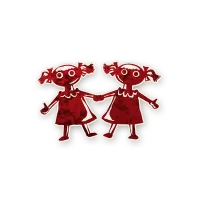
Evil Twin
You & an opposing player know each other. If the good player is executed, evil wins. Good can't win if you both live.
I'm not Sara! I'm Clara! SHE is Sara! Sara is the evil one! Not me!
"You & an opposing player know each other. If the good player is executed, evil wins. Good can't win if you both live." The Evil Twin mirrors a good character, so that the players don't know which twin is good and which twin is evil. The Evil Twin is paired with a good player, chosen by the Storyteller, called the Good Twin. On the first night, the Evil Twin and Good Twin both wake, make eye contact, and learn each other’s character. If the Good Twin is executed, evil wins. If the Evil Twin is executed, the game continues. A dead Evil Twin has no ability, so evil doesn’t win if the Good Twin is later executed. Good cannot win while both twins are alive. Even if the Demon is killed, the game continues. Good will need to kill the Evil Twin as well as the Demon to win. If a good player is turned into an Evil Twin, they are still a good player, with an evil player becoming their twin. It doesn’t matter which twin is which character, what matters is their alignment—the good team can execute the evil player safely, but if they execute the good player, evil wins. If both Twins are the same alignment, the Storyteller chooses a new Twin.
How to Run
- While setting up the game, choose a Good Twin by marking any good character with the TWIN reminder. During the first night, wake both Twins. Let them make eye contact. Point at the Evil Twin, then show the Evil Twin token to the Good Twin. Point at the Good Twin, then show the Good Twin’s character token to the Evil Twin. Put them both to sleep.
- While both Twins are alive, the good team cannot win. If a good- aligned Twin is executed, the evil team wins.
Examples & Notes
- If a Pit-Hag creates an Evil Twin during the final night, either make the other Twin the Demon player or a dead player, so that the good team is still able to win.
- It is rarely a good idea to choose a Traveller to be a Twin.
Demon

Zombuul
Each night*, if no-one died today, choose a player: they die. The 1st time you die, you live but register as dead.
I do not. Understand. Your ways. Fellow human. Show me. The dirt. Where the holy. Lay. Sleeping. I too. Must sleep. Soon.
"Each night*, if no-one died today, choose a player: they die. The 1st time you die, you live but register as dead." The Zombuul secretly remains alive while in the grave. When the Zombuul would die for any reason, they actually don’t die, but the Storyteller acts as if they died. The second time the Zombuul dies, they die for real and good wins. The seemingly dead Zombuul counts as a dead player in almost every way. The player’s life token on the Town Square flips to indicate their death. The next time they vote, they lose their vote token. They cannot nominate, they may vote with the Voudon, they’re not an alive neighbor for the Tea Lady, and so on. The only differences are that the game continues, the Zombuul still attacks, and the game continues if just two other players are alive. The Zombuul only wakes at night to attack if nobody died that day. If a dead player is executed, the player can’t die again, so the Zombuul would still wake. If a drunk or poisoned Zombuul dies, good wins. If a “dead” Zombuul becomes drunk or poisoned, do not announce that the player is alive.
How to Run
- The first time the Zombuul would die, they remain alive. Declare that they died, but do not add a shroud to the Zombuul. (Flip the life token on the Town Square, as normal.) From now on, the Zombuul registers as dead.
- Each day, if a player dies, mark them with the DIED TODAY reminder. (If the Zombuul “dies” by execution, they register as dead, so mark the Zombuul with the DIED TODAY reminder.)
- Each night except the first, if any player is marked DIED TODAY, do not wake the Zombuul.
- Each night except the first, if no player is marked DIED TODAY, wake the Zombuul. They point at any player. Put the Zombuul to sleep. The chosen player dies—mark them with the DEAD reminder.
Demon

Legion12
Each night*, a player might die. Executions fail if only evil voted. You register as a Minion too. [Most players are Legion]
우리는 겨울날의 차가운 바람이다. 우리는 달 없는 밤의 그림자다. 우리는 네 찻잔 속 독이며, 네 귓가의 속삭임이다. 우리는 어디에나 있다.
"매일 밤*, 플레이어 1명이 죽을 수도 있습니다. 악 플레이어만 투표했다면 처형은 실패합니다. 당신은 하수인으로도 판정됩니다. [대부분의 플레이어는 군단입니다]" 군단은 여러 명의 악마입니다. 권장되는 선과 악의 인원 수는 보통과 정반대입니다. 예를 들어 10인 게임이라면, 대략 군단 7명과 선 플레이어 3명 정도로 구성됩니다. 군단이 아닌 플레이어들은 마을주민과 외지인이 어떤 비율이든 섞여 있을 수 있습니다. 지명에 적어도 선 플레이어 1명이 투표했고, 그 결과 누군가가 죽기 직전이 되었다면 처형은 평소처럼 진행됩니다. 반대로 악 플레이어만 투표했다면, 그 지명의 투표 수는 0표로 취급됩니다. 각 군단 플레이어는 악마이면서 동시에 하수인으로도 판정됩니다. 밤마다 누가 죽을지는 이야기꾼이 정합니다. 살아 있는 선 플레이어가 단 한 명만 남았다면, 선은 더 이상 이길 수 없으므로 이야기꾼은 악의 승리를 선언할 수 있습니다. 이야기꾼은 군단 플레이어들에게 허풍용 캐릭터를 주지 않기로 결정할 수도 있습니다.
How to Run
- 첫날 밤 악마 정보 단계에서, 모든 군단 플레이어가 서로 눈을 마주치게 하세요. 필요하다면 군단이 아닌 플레이어들을 손으로 가리켜 군단이 누가 선인지 알 수 있게 해도 됩니다.
- 첫날 밤을 제외한 매일 밤, 플레이어 1명이 죽도록 정할 수 있습니다.
- 투표를 셀 때는 평소처럼 큰 소리로 수를 세세요. 누군가가 죽기 직전이 될 만큼 표가 나왔더라도 악 플레이어만 투표했다면, 그 지명의 투표 수는 0표라고 선언하세요.
Examples & Notes
- 대부분의 밤에는 선 플레이어보다 군단 플레이어를 죽이는 편이 좋습니다. 선 플레이어를 죽이면 보통 악 팀에 너무 유리해집니다. 목표는 생존자가 3명 남는 상황, 즉 선 2명과 군단 1명이 남는 구도를 만드는 것입니다. 마지막 날에 플레이어들이 처형하지 않았다면, 그날 밤 선 플레이어 1명을 죽여 악이 승리하게 하세요.
- 플레이어들이 "정말 0표가 되는지 시험해 보겠다"며 서로에게 투표를 강요한다면, 0표 지명도 성공한 것처럼 선언하되 실제로는 누가 진짜 죽기 직전인지 비밀리에 기록해 둘 수도 있습니다. 군단의 곧 죽음 알림을 표시해 두었다가 지명 단계가 끝난 뒤 그 플레이어를 처형하면, 군단 게임 특유의 미스터리와 긴장감을 더 잘 살릴 수 있습니다.
Fabled

Sentinel
There might be 1 extra or 1 fewer Outsider in play.
Name, please. Papers, please. Weapons, please.
"There might be 1 extra or 1 fewer Outsider in play." Add the Sentinel to your script to keep the number of Outsiders in play mysterious. The official character lists are carefully constructed so that the number of Outsiders is never completely known, which lets evil players safely bluff as Outsiders. Many of the games you create using the Script Tool will not have this luxury. If, for one reason or another, the number of Outsiders in a game will become certain, the Storyteller can add a Sentinel. This will confuse matters and help the evil team either bluff as Outsiders or make existing Outsiders look suspicious. Games with a Sentinel in play might have one more Outsider than normal. They may have one less. They may have the normal amount. It is up to the Storyteller.
How to Run
- At the start of the game, declare that the Sentinel is in play. Add the Sentinel token to the Grimoire.
- While setting up the game, before putting character tokens in the bag, add an Outsider token and remove a Townsfolk token, remove an Outsider token and add a Townsfolk token, or do neither.